Gintaras Rinkevičius
Conductor

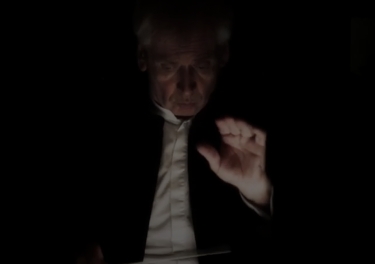
Did you know that the conductor’s baton wears out? It slowly frays because of air resistance. We don’t often think of the conductor as having his own instrument; more often we conceive of him (or her) as a master of all instruments. Alone in front of the orchestra, a few steps ahead, but always together with his fellow musicians. Who knows, what else, if not his baton, remains his only ally at certain moments?
As the winner of the legendary 1985 Herbert von Karajan Conductors’ Competition as well as many other prestigious prizes including the Lithuanian National Prize for Culture and Arts, Gintaras Rinkevičius is currently the most sought-after Lithuanian conductor. A musician to the marrow of his bones, he is admired above all for his ability to give cues straight to the singer’s lips. Every singer feels safe on stage with him conducting the performance. On the other hand, everybody knows that you must give 100 percent while working with this Maestro.
I study all the time. That's my job. Sometimes I even have to learn how to learn - how to work on a particular opera, how to find common ground with the director, how to collaborate with him… Otherwise, there is no chance to achieve the desired result. The compromise between conductor and director is a separate topic... Some can't even stage one performance together. But Dalia Ibelhauptaite and I have been working together for twenty years!
Such collaborations are particularly rare, perhaps even a unique phenomenon in the opera world. Reconciling these two positions, two different attitudes, is just as complicated as a situation where you need to work on a modern production of an opera whose composer is still alive. After all, he has his own interpretation and one can only imagine how much freedom he would allow to others. Dalia and I both learned how to work with each other. And work.
Every artist changes with each new creation. I always feel a little more grown-up, a little bit older, because I understand a lot more. This happens to everyone, when you read a totally new book or a favorite novel for the second time. The feeling, when a twenty-year-old reads a deep, ingenious book and then picks it up at the age of 40, 50 or 60, is similar. Like experiencing the same piece of music anew.
Each new show we staged brought a different feeling. Each opera really should be spoken about separately. It’s hard, even impossible, to talk about them in general terms. When I think about the entire repertoire we have accumulated, the first thought that comes is that we do not have a suitable stage and adequate technical opportunities for the productions we create. But I want us to carry on and produce as many new and interesting stage works as possible, especially operas by R. Wagner.
I am a man who believes in a bright future, in the influence of art, that beauty will save the world… So, looking back, I think I was expecting everything that has happened since the first “La Bohème”. I remember that before the premiere, I felt the same thrill of birth, that had previously visited me while creating the Lithuanian State Symphony Orchestra. You have to believe for it to become reality.
During each performance, the singers give their best and they all love music. Even if the musicians and soloists make a mistake, I try to help them as much as possible with gestures and willpower. Sometimes I’m very angry, in my mind I am cursing, but the flaw is already there. Only later we can talk about it.
The conductor's work is such that during the show many details and actions are so engaging and absorbing that you get fully engrossed in the flow. Only in the interval or after the whole opera finishes do I have time to analyze what and how it was. On one hand, the conductor does not need to be as calm as the performer, who must hold a steady breath so as not to damage the sound of his instrument - the voice. On the other hand, the conductor constantly manages the situation and has to possess very steady nerves, not to get emotional during the most beautiful and subtle musical episodes. Sentimentality and the beauty of music can lead to exaltation that a conductor cannot afford. Sure, there’s some thrill before entering the stage, but once the music starts, all anxiety evaporates.
Would I repeat the whole "La Bohème” production story again? Definitely.
Works with Vilnius City Opera
Salome
Conductor
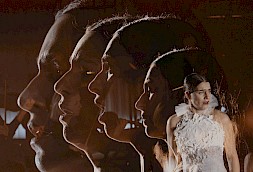
THE QUEEN OF SPADES
Conductor
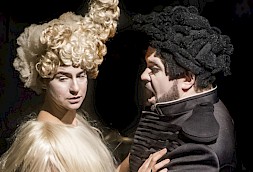
SAMSON ET DALILA
Conductor
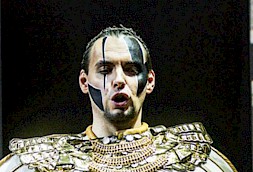
FAUST
Conductor
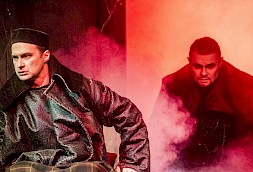
TOSCA
Conductor
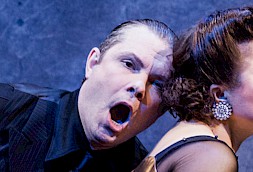
PELLÉAS ET MÉLISANDE
Conductor
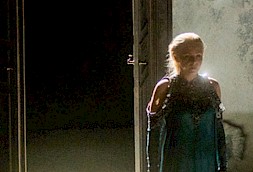
IL TROVATORE
Conductor
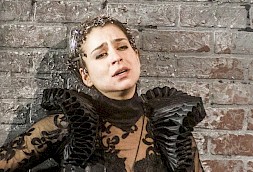
HÄNSEL UND GRETEL
Music director
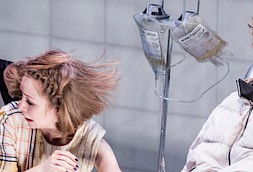
COSI FAN TUTTE
Conductor
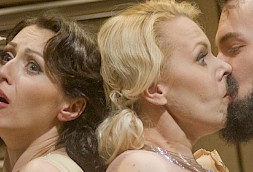
ARIAS FROM THE SHOWER
Conductor
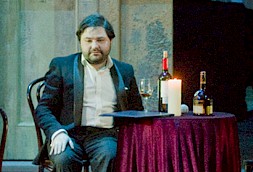
MANON LESCAUT
Conductor
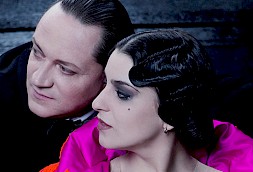
KÁŤA KABANOVÁ
Conductor
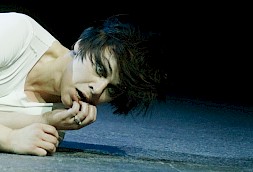
ONEGIN
Conductor
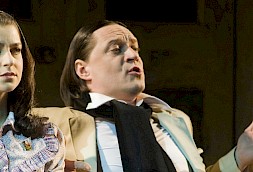
NIGHTINGALES RETURN
Conductor
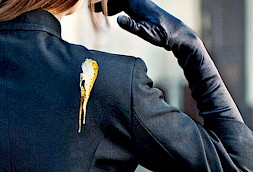
BOHEMIANS' DREAMS
Conductor
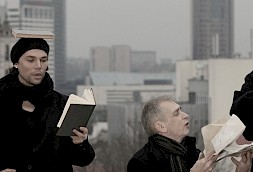
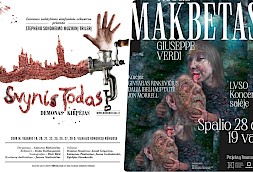
SWEENEY TODD – THE DEMON BARBER OF FLEET STREET
Conductor
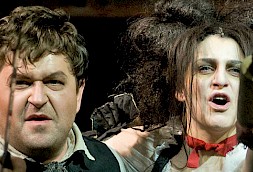
WERTHER
Conductor

PAGLIACCI
Conductor
DIE ZAUBERFLÖTE
Conductor
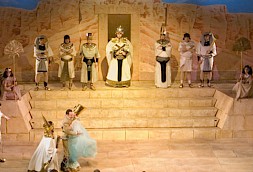
LA BOHÈME
Conductor

Opera theaters, concert halls
Austria
United Kingdom
France
Sweden
Sweden
United Kingdom
The Netherlands
Latvia
Lithuania
Germany
Finland
Spain
Spain
And other
Collaborated with
Berliner Symphoniker
Die Staatskapelle Weimar
Brandenburgisches Staatsorchester Frankfurt (Oder)
Tampere Philharmonic Orchestra
Danish National Symphony Orchestra
Tivoli Symphony Orchestra
Odense Symphony Orchestra
Violeta Urmanavičiūtė-Urmana
Matti Salminen
Badri Maisuradze
Aleksandrs Antonenko
Jurijus Bašmetas
Peter Donohoe
Gidon Kremer
David Gering
Sergejus Larinas
Roger Muraro
And other
Repertoire
Around 50 operas and ballets, all symphonies by L. van Beethoven, J. Brahms, G. Mahler, D. Shostakovich, premieres in Lithuania – Symphony No. 8 in E-flat major by G. Mahler, C. Franck “Les Beatitudes”, P. Glass “Itaipu”, D. Shostakovich’s “Lady Macbeth of the Mtsensk District”, J. Juzeliūnas “Žaidimas” and others.
Awards
1994
Lithuanian National Culture and Arts prize
1996, 2000
Latvian Grand Music Award for merits to Latvian culture
1997
Order of the Lithuanian Grand Duke Gediminas, Fourth Class
1998
The Royal Norwegian Order of Merit
2001
Latvian Order of the Three Stars
2004
Ordem do Merito Comendador of the Portuguese Republic
2009
The Order for Merits to Lithuania Grand Commander
2014
The Ministry of Culture of Republic of Lithuania honorary award “Nešk savo šviesą ir tikėk”
2020
The Order for Merits to Lithuania Grand Cross
Other
1988
Founder of Lithuanian State Symphony Orchestra, music director and principal conductor
1996–2003
Music director and principal conductor at Latvian National Opera and Ballet theatre
2002–2005
Principal conductor for Malmö Opera (Sweden)
2007–2009
Main guest conductor at Latvian National Opera and Ballet theatre
2008–2017
Music director and principal conductor for Novosibirsk Academic Symphony Orchestra
2017 - present
Leads the Liepāja Symphony Orchestra
Professor at Lithuanian Academy of Music and Theatre

Related news
Bohemians Turn 20: Anniversary Season to Culminate in Norma with Asmik Grigorian

Sustainability in opera: how Juozas Statkevičius’s costumes were given new life a decade later
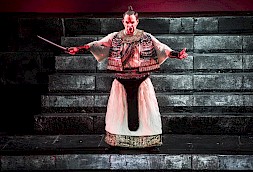
When everything hangs in the balance on stage: the invisible heroines of Dalia Ibelhauptaitė’s productions reveal the secrets behind the scenes
How Bohemians’ advertising took to the streets and changed perceptions of opera