Sponsors
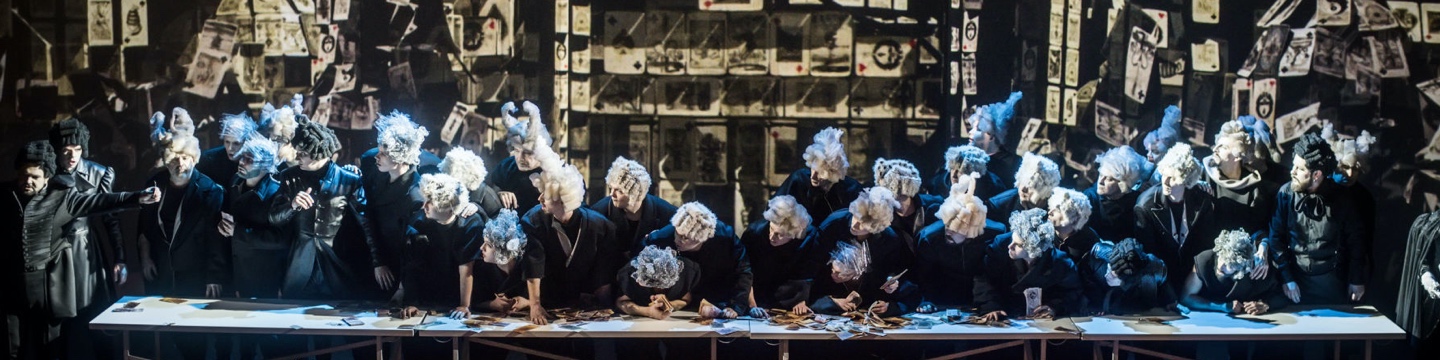
From 2006 to 2021, VCO was supported by Lithuania’s most prominent business companies and private individuals.
Patronage is not charity - it is friendship and partnership. Just as centuries ago there would be no paintings by Caravaggio, Rubens, or Rembrandt without their patrons, so too, there would be no independent performances, operas, or works of art today. Such art can only come to life through patronage, and we sincerely hope that in the new decade of VCO, more people from the new generation of patrons will join us.
Dalia Ibelhauptaitė:
Without patrons, there would never have been Vilnius City Opera or the “bohemiečiai.” Not a single performance would have happened, we wouldn’t be celebrating the achievements and careers of our soloists, and young people wouldn't have had a platform to gain experience, to train, and to grow wings for their future flights.
In 2004, I directed a play in New York at the Theatre for a New Audience, and I was deeply impressed by the fact that 90% of the production’s budget was funded by sponsors. I met and spoke with those sponsors, learning how they understood and valued patronage. Growing up in Soviet Lithuania, this concept was entirely new to me - back then, all theaters were state-run.
That experience planted the idea in my mind: it would be wonderful to create opportunities in Lithuania for a privately supported company that could produce non-commercial performances - enabled by private patrons - to stage works with young performers, invest in them, and provide opportunities that state theaters couldn't. In those days, a young person coming from the music or theater academy would only get minor roles in opera houses. They usually didn’t get full-time positions, since theater jobs were lifelong appointments. This meant that one had to wait a very long time for a chance, and opportunities for growth and stage experience were rare and inconsistent.
So, I wanted to offer an alternative - to allow young singers to take on major roles, perform them repeatedly over several days, not just once a year. To work with them on their roles from the beginning, refine them, build their confidence and skillset necessary for the future.
When I returned to Vilnius, I met with my childhood friend, Tomas Kučinskas, then the director of Švyturys-Carlsberg. I told him there must be a young, independent generation of Lithuanian businesspeople ready to support the arts. In 2004, he said to me, “I don’t see that yet, but when I think the time is right - I’ll call you.” That call came in early 2006. Tomas helped tremendously, opening doors and giving me the chance to meet an entire generation of business leaders.
As we hoped, fifteen years after regaining independence, it had become possible and desirable to support the arts - especially something as rare as opera. We had to be honest with ourselves: drama and visual arts were always more familiar and accessible to us, while opera in Lithuania was singular and often experienced only through school trips - which didn’t inspire many to return.
The perfect production to launch this idea was Bohema. It told the story of young people and gave six soloists the chance to debut simultaneously, while also introducing a different kind of opera theater - an acting school approach. I aimed to make our production feel like cinema. We all wanted to reach a new and young audience who had never been to the opera. On October 25, 2006, Bohema premiered with six of Lithuania’s most talented young soloists, and 90% of the funding came from patrons - specifically, the young generation of business leaders.
It was a miracle! When I went to meet them, I was selling a dream, an idea - virtually thin air. We had no similar experience to show, only stories. I will always be grateful to those who believed in us then and gave us this incredible opportunity that continues to this day.
And it's important to remember - we didn’t introduce the idea of patronage in Lithuania, we revived it. Let's not forget that the first opera in Lithuania was presented thanks to the personal initiative of King Władysław Vasa - a lover and patron of the arts. In our time, the only comparable precedent was the LIFE festival.
The “bohemiečiai” had a completely different patronage model than other companies, which often followed a pyramid structure with one main patron. I feared that long-term patronage wouldn’t work that way, so I wanted to attract as many diverse and prominent companies as possible - even competitors - to create something like a club where other matters could be set aside for a shared purpose.
Instead of a pyramid, we had a “cake” structure: major patrons, patrons, and supporters. This formed the unique “bohemiečiai” patronage tradition, where supporters could frequently shift their level of involvement. If one year was financially tougher for some, they could contribute less, and everyone felt at ease knowing the burden wasn’t on any one pair of shoulders.
Patronage became like a family that supported us from 2006 to the very end of our journey.
It empowered us to create those cinematic productions, where much attention was paid to scenery. We knew the Congress Hall and its stage weren’t ideal, but one thing was valuable - the intimacy between performer and audience. Here, they were close - just like the scenery - so we could invest effort (and money) into details that the audience could observe like in a movie.
The patrons gave a huge opportunity to the creative work of Juozas Statkevičius and later Jonas Morrell: to produce brilliant, lavishly detailed costumes like never before seen in Lithuania. Patrons also allowed us to be the first in the country to run large, idea-driven advertising campaigns. Like in New York, we were the first to place ads on trolleybuses, to take out full-page spreads like in The Guardian or The New York Times, and to introduce interactive advertisement pillars on the streets, among many other initiatives.
That’s why VCO always bows deeply to our patrons - those who joined our family and became a strong, trusted part of our creative journey.
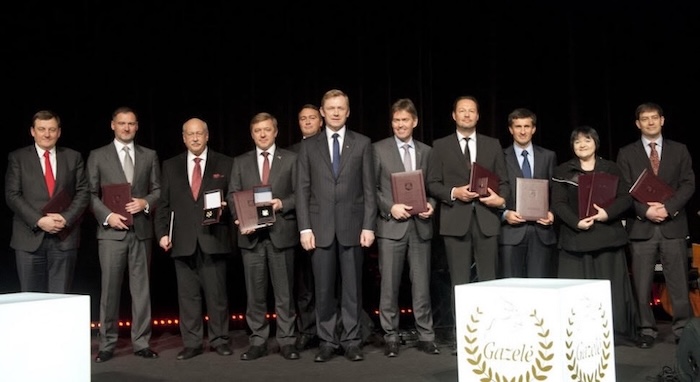
For many years, I strove for patronage to grow and be recognized in Lithuania. I wanted to honor sponsors not just within our own circle but also nationally - across the cultural landscape. Unfortunately, we couldn’t do that from the very beginning, but eventually, the Ministry of Culture introduced the Patron of the Year medals, and we are very happy that many of our supporters received this honor:
2015
Tomas Kučinskas
Nicolas Ortiz (Baltisches Haus)
Bjornar Lund (DNB Bank)
Arvydas Avulis (Hanner)
Rolandas Viršilas (Švyturys)
Vilius Kavaliauskas (LEWBEN Group)
Jonas Garbaravičius (Scaent Group)
Nerijus Dagilis (Hermis Capital)
Antanas Zabulis (Omnitel)
Rolandas Valiūnas (LAWIN)
2017
Kęstutis Martinkėnas (Modus Group)
Vaidotas Šileika (Klaipėda Container Terminal)
Arūnas Martinkevičius (SBA)
Gerard Rog (IKI)
Antanas Muraška (Olifėja)
FOUNDERS
2012
Dalia Ibelhauptaitė
Tomas Kučinskas
Asmik Grigorian
2013
Asmik Grigorian transferred her share to the Vilnius City Municipality
Patrons
Communication
Verslo klasė

Vaga

Garsų pasaulis

.
Great patrons (2006-2026)


























Become a Sponsor
- Log in to your online banking system:
- Start a new transfer.
- In the transfer form, enter the following information:
Recipient of support: VšĮ „Vilniaus Miesto Opera“
Identification number: 302817107
Bank: AB SWEDBANK
Account number: LT897300010132191509
Payment purpose: SUPPORT - Enter your chosen amount and confirm the transfer.
- Thank you for your support!
Allocate 1.2% of your Income Tax (GPM)
- Log in to the Electronic Declaration System (EDS).
- In the menu bar, choose "Declarations", then "Fill out the form".
- Select form FR0512.
- Enter your personal details.
- Fill in the following fields: Pavedimo lange suveskite žemiau nurodytus duomenis:
5 Tax year: 2025
6S I allocate part of the tax to support recipients: YES
E1 Recipient type: Beneficiary (Paramos gavėjas)
E2 Recipient identification number (code): 302817107
E3 Purpose of the tax portion: Parama
E4 Tax portion allocated (in %): 1,2 (or your chosen portion)
E5 I allocate the tax portion until the tax year: 2025
6. After completing the form, click "Submit declaration" in the top right corner.
7. Thank you for your support!