In Vilnius Town Hall Square – “La Bohème,” which changed the course of Lithuanian opera
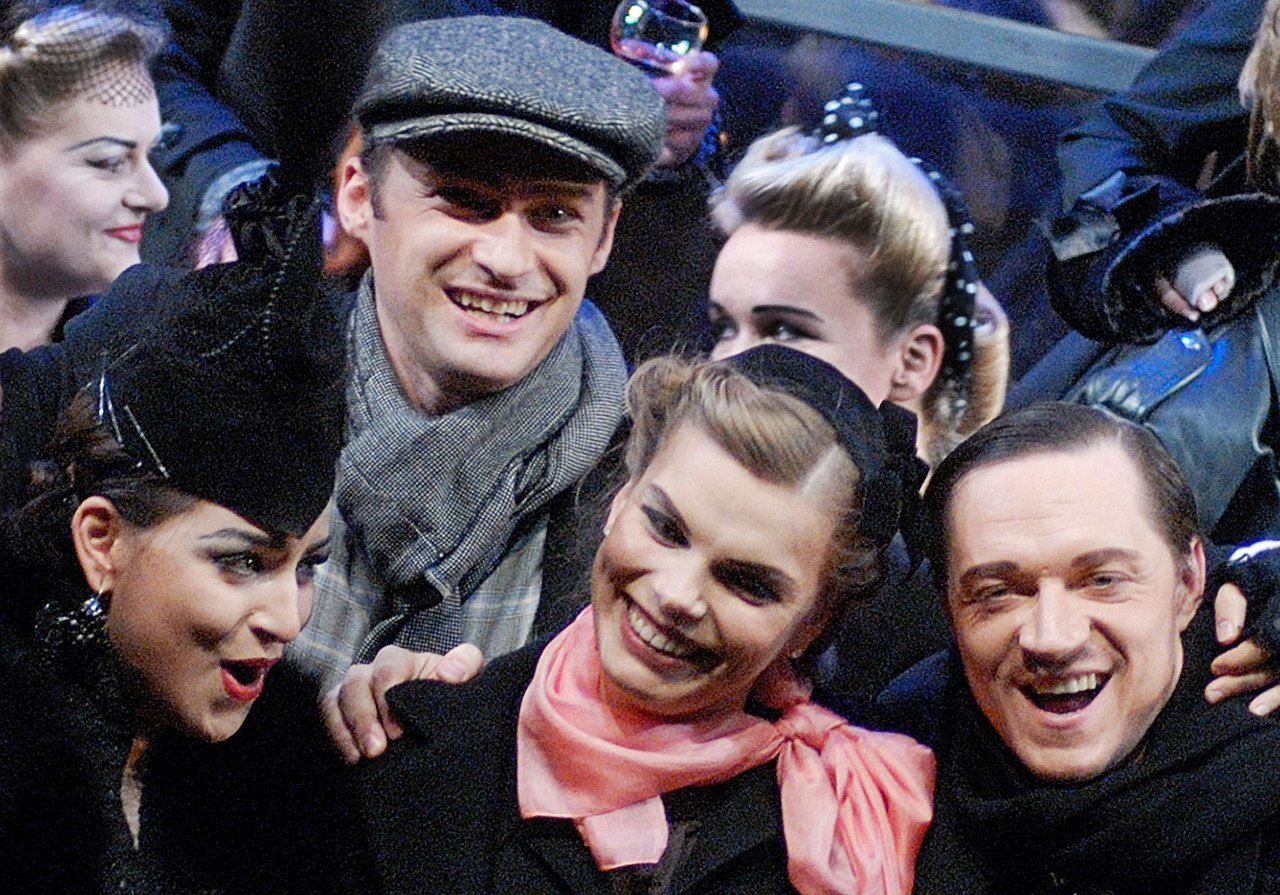
Twenty years ago, in 2006, an extraordinary transformation took place in Lithuanian opera, one that was difficult to comprehend in its scale at the time. Bringing together the future Vilnius City Opera ensemble, the production of “La Bohème”, directed by Dalia Ibelhauptaitė and created together with the Lithuanian State Symphony Orchestra led by maestro Gintaras Rinkevičius, brought youth, relevance and the romance of the 1950s back to Lithuanian opera.
One of the first performances of this production, captured on video, will be shown by its creators on September 17 at 8 p.m., together with the Vilnius City Municipality. All curious residents and guests of Vilnius are welcome to attend; the event is free. It will begin at 7 p.m. with introductory discussions and conversations with professionals from the world of opera.
The well-known opera by Giacomo Puccini is the starting point for many young vocalists. After all, the work itself tells the story of the struggles of young Parisian artists, their path towards the heights of their profession and their personal challenges. And so, at the time, an unprecedented organization was born – the second professional opera theatre in the country’s history – the “Bohemians”. Its main mission has always been to bring young opera soloists to the big stage, giving them the opportunity to perform the leading roles.
In the first performances, the characters were created by their peers, among them such now well-known soloists as Asmik Grigorian and Edgaras Montvidas. These were the first “Bohemians”, whom audiences will be able to see in Town Hall Square together with the entire unforgettable cast of October 25, 2006.
In director D. Ibelhauptaitė’s conception, the period in which “La Bohème” takes place was both “modernised” and distanced – Lithuania, which was part of the Soviet Union and had experienced deportation, never truly experienced the intoxication of the 1950s. At least not openly. Thus, while Puccini’s story moved forward in time, the Lithuanian audience turned the clock back to a past they had probably only seen in films.
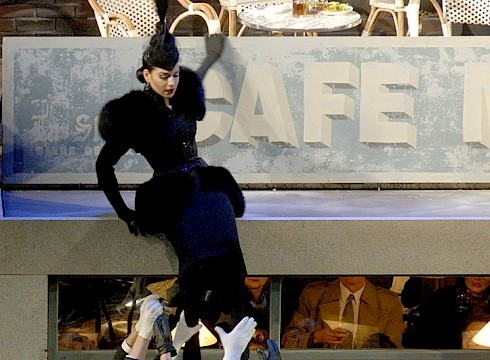
This was achieved not only through the impressive sets by British scenographer Dick Bird, but also through Juozas Statkevičius’s costumes, which entered the history of theatre and fashion, created from clothing and pieces of fur purchased in second-hand shops, altered and used in unexpected ways. They were complemented by authentic hairstyles of the period, created by the hands of hair stylists several hours before each performance. Chorus performers and a large group of actors who were still studying at the time recalled that, when several performances were shown in succession, they would even stop dismantling the hairstyles after each performance – once firmly shaped, they could withstand even a couple of performances.
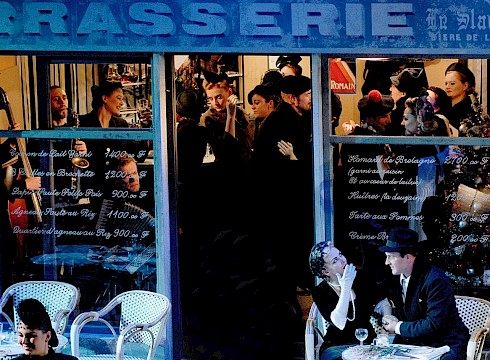
The lasting impression of “La Bohème” was further strengthened by something new for that period – cinematography on stage. The static chorus, traditionally performing the role of commentator in opera, suddenly became individual, distinctive residents of Paris, telling the stories of their lives. Audiences would come to see this production several times, trying out different seats in the hall each time. This completely changed the impression of the performance – there were so many details inhabiting every corner of the stage, in the role of every soloist, actor and chorus member.
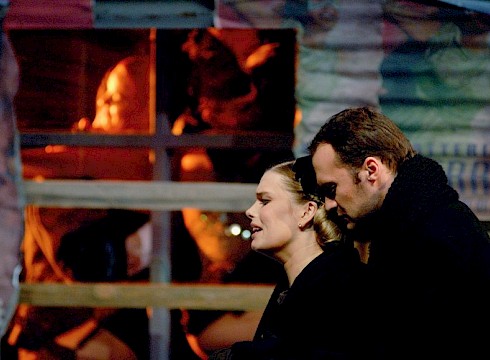
Speaking of the soloists, the character lines of their roles were structured almost like the score itself and filled not only with emotions, but also with physical tasks and even stunts, such as Laimonas Pautienius’s Schaunard somersault or A. Grigorian’s jump as Musetta from the second floor of the “Momus” café. By the way, choosing Asmik to perform the role of Musetta was an unusual decision by D. Ibelhauptaitė, the far-sighted reasoning behind which only became clear much later: the director wanted Asmik, who had grown up in a family of opera stars, to create her own unique career path. Probably no one would dare claim that such an approach did not prove successful.
And Asmik, together with Sandra Janušaitė, who performed the role of Mimì, were eager to try even more colours and once decided to exchange roles, reassuring the director and conductor that their shoe sizes were the same, so there would be no problems with the costumes. “We are talking about two major leading roles, and they are talking about shoes!” D. Ibelhauptaitė recalls with a laugh today.
“La Bohème” opened the way not only for the young opera talents of that time in Lithuania, but also allowed the troupe to attract foreign performers, establishing the international scale that characterises opera today. Over the years, the role of Rodolfo was performed by tenors from neighbouring Latvia, other European countries and even Australia. French tenor Sébastien Guèze, meanwhile, returned to work with VCO more than once and even created the major role of Faust.
The numerous acting tasks allowed the soloists to not only feel confident, but also to improvise. Unfortunately, not all creativity born spontaneously on stage ends successfully. During one performance, a careless movement with a heavy stage prop resulted in the head of Egidijus Dauskurdis, who was singing Colline, being cut open. The shock was so great that the other soloists... did not even stop the scene and managed to sing their colleague’s part while the female soloists, backstage, stopped the blood flowing from his wound, as though it had been written into the opera that way. Everything ended successfully, but from then on this scene was rehearsed much more carefully.
Scenographer Dick Bird, working in Lithuania for the first time, revealed unexpected possibilities of the then Congress Palace hall (now the LVSO Concert Hall), proving that the right trick is enough to create a miracle. Audiences were amazed by the rooftops and attics of Paris, which later transformed before their eyes into the bustling Montmartre square.
Probably for the first time in the history of Lithuanian opera, audiences also rewarded stage technicians with thunderous applause. At the time, it was also unusual that ninety percent of the money for this grand production was raised from private sponsors and large businesses, reviving the long and fruitful tradition of contemporary patronage in Lithuania.
No opera lover needs to be told what happened after the first performances of “La Bohème” in Vilnius. A new theatre was born at that time from an idea and a tremendous desire to create in the way that seemed right to the creators themselves. Dalia Ibelhauptaitė, Gintaras Rinkevičius and Juozas Statkevičius became perhaps the first creative team of this kind.
Having tested their strength abroad and received recognition there, they returned to Lithuania to build safe islands of creativity for those whom others had overlooked, or for those who did not know where, or whether at all, they could return. Alongside them, future conducting stars were also growing in Lithuania – the children’s choir that appeared on stage included conductor Giedrė Šlekytė, who is now pursuing an international career, as well as Martynas Stakionis, the current artistic director of the Lithuanian National Opera and Ballet Theatre. Many familiar names could also be found among the actors who worked here, now scattered across television and drama theatres.
Through many of their decisions at the time, the “Bohemians” surprised people; they seemed different, alternative. It is clear that the boldness of their beginning officially became a historical marker and entered the pages of opera of national significance. Over the last 20 years, dozens of performances and concert programmes have been created, and an entire generation of outstanding opera stars has been nurtured, promoting the country’s name around the world.
Meanwhile, “La Bohème” itself was revived more than once on other stages: at the Klaipėda State Musical Theatre and later at the Lithuanian National Opera and Ballet Theatre, where it could continue to serve as a springboard for the newest generations of opera singers to shine. It will be performed live here for the final time this December: “I always knew that performances cannot live forever, especially those that were created to nurture young people. Our twentieth anniversary is a wonderful opportunity to see ‘La Bohème’ as it was at its premiere, with a cast that will never exist again, and then, after its final performance on the LNOBT stage, say goodbye to it--as a reflection of our past work, without locking ourselves inside a display case of a living museum, but instead continuing to create new, relevant things and look forward,” says D. Ibelhauptaitė.
The project is funded by Lithuanian Council for Culture and Vilnius City Municipality.
Related news
Bohemians Turn 20: Anniversary Season to Culminate in Norma with Asmik Grigorian

Sustainability in opera: how Juozas Statkevičius’s costumes were given new life a decade later
When everything hangs in the balance on stage: the invisible heroines of Dalia Ibelhauptaitė’s productions reveal the secrets behind the scenes
How Bohemians’ advertising took to the streets and changed perceptions of opera