The soloists on Juozas Statkevičius: costumes you can never forget
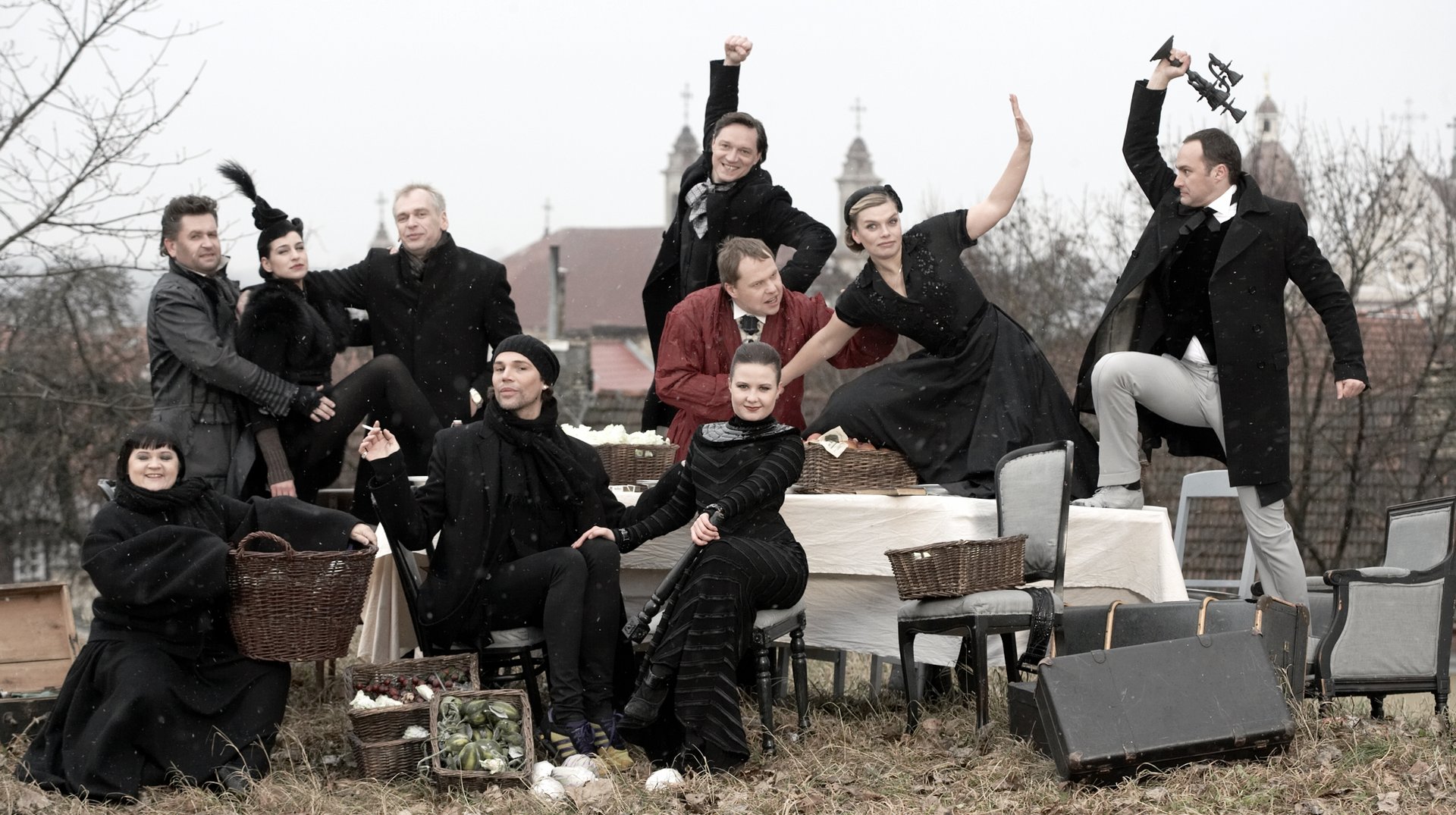
From September 17 to 20, Vilnius City Opera will celebrate its twentieth anniversary by offering free screenings of four productions from the first decade of the “Bohemians” in Vilnius Town Hall Square. Alongside the names of Dalia Ibelhauptaitė and Gintaras Rinkevičius, a third name is always mentioned when that decade is recalled: costume designer Juozas Statkevičius.
Eight “Bohemian” soloists remember his costumes and the stories surrounding this extraordinary personality. Eight singers who performed in La Bohème, The Magic Flute, Werther, Pagliacci, Eugene Onegin, Manon Lescaut, Così fan tutte and Sweeney Todd talk about the same man - and tell very different stories. For some, his costumes were a challenge; for others, they were the one thing that finally allowed them to feel the characters they were portraying. But all eight remember the same details: gold that refused to wash off after several showers, dresses embroidered with buttons that required the stage floor to be softened, corsets he tightened himself, and scissors that cut thirty centimetres of hair during a single makeup fitting.
Asmik Grigorian, who says she has never been particularly interested in costumes, sums up Juozas Statkevičius’s work succinctly: “All designers have their own style, but Juozas is truly one of the most talented designers in the world I have ever worked with or even seen. What he creates for the stage is truly great, great art.” Kostas Smoriginas is even more concise: “I am very grateful to Juozas. For his work, for his love of opera, and for his contribution to Lithuanian art and theatre.”
“The stage demands sacrifices”
Kostas Smoriginas says he had only one problem with Juozas Statkevičius: his stomach. The jackets and trousers were so tight that he had to pull it in - and his diaphragm along with it, which is no small matter for a singer. “Juozas, I can’t do this, please don’t make a jacket like that. Or don’t make the trousers so tight,” he would plead. The answer was always the same: “No, it has to be this way. The stage demands sacrifices.”
So he had to sing with his stomach pulled in. Kostas Smoriginas does not complain about it. “Everyone walked around with their stomachs pulled in because he wanted you to look elegant. But, generally speaking, everything was always excellent, and the costumes were very interesting.” He considers it a plus - for fashion, for the costumes themselves, and for the overall aesthetic of the production. Not every designer enjoys working in theatre, but one of Lithuania’s greatest fashion talents was always open to creating costumes for the stage.
Women had to make even greater sacrifices. In Sweeney Todd, Jovita Vaškevičiūtė sang the Beggar Woman, a role for which, one might think, rags would be enough. Statkevičius made her a corset, too. “I said, ‘Juozas, could you loosen it a little here?’ And he said, ‘No, no, a woman has to suffer,’” the singer recalls. And he would tighten it even more, explaining that even a beggar had to have a waist. “He always knew how to emphasise femininity. And all the little details - the gloves, the hats with their piping, the trims. It was an extraordinary impression, and it has stayed with me to this day.”
Joana Gedmintaitė, who sang Mimì in La Bohème, also remembers the corset as her first challenge. The clothes looked modest, but they were designed to emphasise femininity, while Mimì’s role demands a great deal: she lies on a bed, faints, falls to the floor, and has to sing throughout. “It took us a while to get used to it,” she says. But she has nothing but praise for the result: “That little dress looks simple, but it is actually very elegant and beautiful. You could confidently wear an outfit like that to a formal reception.”
Gold that wouldn’t wash off
The production that left the strongest impression on everyone was The Magic Flute. Tadas Girininkas describes it in three words: “Gold, gold, gold everywhere!” A gold costume, gold makeup, golden eyelashes, glitter all over the face. It was his first production and the beginning of his career. The costumes also had one particular feature: “They were the kind of costumes with no zippers, so you couldn’t go to the toilet. Not for the entire performance!”
Laimonas Pautienius sang Papageno in the same opera. He wore a synthetic jumpsuit covered in sequins that never left him feeling cold, and he still remembers the makeup vividly. First, his face was covered with Vaseline so that the gold dust would stick; then everything was coated in gold - his teeth, his ears, every inch of his face. “Eventually, you forget about it anyway, so you wipe your face with your hand - and all your fingers turn gold, too…”
The most memorable part, the singer says, was cleaning up after the performance. First came wipes soaked in various oils, then a shower, because the microscopic particles managed to get everywhere. “And you go home, and the gold keeps settling there for days afterwards.” The opera singer says he would sneeze gold, and golden water would run down the drain in the shower.
Gedmintaitė says the gold followed them into their everyday lives. “My husband would laugh and say, ‘Well, I’m going to bed with a golden woman,’ because even the bed was covered in gold.”
The dress that made a sound
The most famous costume in that production was Pamina’s dress, entirely embroidered with three and a half thousand mother-of-pearl buttons, layered like the scales of a shell.
Asmik Grigorian remembers it as the heaviest costume she had ever worn. She also remembers a dress that made a sound: the buttons rattled against one another, and you could hear them. Juozas came up with a brilliant solution, lining the bottom of the dress with a padded quilt. In her staging, Dalia Ibelhauptaitė had arranged things so that Asmik had to fall to her knees in every scene. “Every time I fell to my knees, those little buttons would come off…”
After every rehearsal, Statkevičius would sew new ones back on himself. “I felt so sorry for Juozas,” the singer says. The button-covered dress was not the only place where she saw how much of Statkevičius’s own handiwork went into his creations. In Sweeney Todd, he did everything himself, by hand. “Sometimes I wondered how it was even possible to put so much work into something.”
“It’s not a costume, it’s a challenge”
For Lauryna Bendžiūnaitė, those dresses are a form of art in their own right. You had to learn to walk in them without producing a rhythmic accompaniment that Mozart had never written. She first encountered Statkevičius’s work in the same production of The Magic Flute, where she sang the First Lady. The costume was tight, made from almost non-stretch material, with her legs bound together and enormous platform shoes underneath. “We were packaged up like mummies. It wasn’t a costume; it was a challenge.”
Her first reaction, she says, was shock, followed by a gradual process of acceptance. But you had to think constantly: how would you stand, how would you sit? And if you needed to run to the toilet, that was an entirely different story.
Can tightening a corset make you faint? “Yes, it happens very often. It’s a very common problem,” Bendžiūnaitė confirms. But on the day of a performance, she says, there is so much stress and so much to concentrate on that you forget about such things. “The music takes over, carries you away - and then you don’t think about it.”
Scissors, hair rollers and opening night
Statkevičius never stopped at the fabric itself. In 2012, Tadas Girininkas arrived for the makeup fittings for Manon Lescaut with shoulder-length hair. The production required a special hairstyle. The designer sat him down in a chair and cut off about thirty centimetres. “He just chopped it off.” The singer did not utter a word of protest. “But the feeling of it was useful,” he says now, adding that you can expect anything from Juozas.
Laimonas Pautienius also had longer hair at the time of Werther, and Juozas spent a long time trying to decide what to do with it. One option did not work, nor did another. The solution arrived on the evening of the premiere, when the singer was already sitting down for makeup: his hair had been rolled up, and Laimonas spent some time walking around in curlers. Then, as usual, he had to go and appear before the orchestra before the performance. “I had barely stepped backstage when the orchestra musicians burst out laughing. I thought, ‘Now everyone’s going to laugh themselves silly and won’t even play.’”
The curls made another appearance in Sweeney Todd, although they quickly fell out, so hairspray was applied without restraint. Pautienius never argued. “I didn’t like arguing. You get used to the makeup, and that’s that. What wouldn’t you do for art and for the character? Juozas’s work is impressive. The historical costumes, the fabrics, the hairstyles - it’s all top-class.”
“Well, your Majesty!”
Jovita Vaškevičiūtė says that the fitting process at Statkevičius’s studio was a performance in itself. He would measure you while praising you the entire time, telling you how wonderful and beautiful you were. “Don’t worry, don’t worry. We’ll hide it, we’ll fix it, we’ll come up with something,” Juozas would say. And he would make it so that you stepped onto the stage like a queen.
Before sending you out, he would add: “Chest out - and go conquer the audience!” “That was his energy. A true creator, someone blessed by God,” the singer says.
She has worked in theatres across Europe and with numerous costume designers, but she singles out Statkevičius as number one. She says she has never met anyone like him. Part of it was his attention to detail: even the socks had authentic patterns and proper finishing. But it was also his approach. “He looks at every character, every performer - whether a chorus member or a soloist - through a magnifying glass. And he creates something unconventional, something extraordinarily magical. His costumes reflect the character’s inner world and personality.”
What happens on stage
In Sweeney Todd, bruises were painted onto Jovita Vaškevičiūtė’s Beggar Woman every evening, and her face was also smeared with grease, as Statkevičius insisted. The run of performances was long, and they were already well into the second or third dozen when, one evening, the singer half-jokingly turned to her colleagues. “Listen, someone hit me on the left or the right, and I’ll have a bruise. Then I won’t need to have all that makeup done.”
During one performance, Laimonas Pautienius accidentally shoved her so hard that she went flying straight into the scenery, forehead first. “I hit it so hard that I even heard the audience fall silent,” the singer recalls. Her first thought was about her teeth - were they all still there? A few days later, she had an important concert at the Philharmonic. For the next several performances of Sweeney Todd, she sang without makeup. She simply no longer needed it.
A second life for the costumes
Rafailas Karpis points out that the costumes also lived beyond the performances themselves. They were reused for other events and later productions, often worn by colleagues rather than the people for whom they had originally been made. “It was very interesting, very innovative,” he says. One of the first performances of the electronic opera fantasy XYZ took place in a former Lithuanian cinema.
For that performance, Lauryna Bendžiūnaitė was wrapped in black plastic film. She was packaged up a couple of hours before the concert and remained wrapped until it ended. Inflated orange rubber gloves were placed on the performers’ heads. “The sight was incredible, and it was certainly interesting for the audience to watch. But when you’re completely wrapped in non-breathable plastic, you understand very well how those people must have felt when they were tarred and feathered.” When they were finally released, she says, it felt like coming out of a good sauna.
Karpis also remembers the company’s sense of humour. During a press conference before The Magic Flute, someone quite seriously asked a female colleague whether she minded singing the Third Lady rather than the First Lady - even though the three ladies are simply assigned according to their vocal ranges. Karpis himself was teased in much the same way because he sang the Second Jew in an ensemble of Jewish characters. “Everyone would laugh and say, ‘Look, Rafikas is singing the Second Jew. Not the First.’”
The costume that completes the character
In the end, all eight singers return to the same point: what a costume can do for a role.
Kostas Smoriginas begins with Statkevičius himself. “We are very fortunate to have such a great talent, such a fashion figure, working in theatre.” For him, a costume is not an accessory to a role. “A costume is an integral part of both the character and the performer. Sometimes you only understand who you are once you put the costume on.” Among their later collaborations, he singles out The Queen of Spades. “The costumes were very interesting, and the wigs were equally distinctive and unusual.”
Joana Gedmintaitė describes a moment every singer knows: you rehearse, everything seems to be going reasonably well, and then you put on the costume - and suddenly all the work you have done up to that point comes together. “You find yourself in that particular period, in that particular feeling. You become exactly the person you are portraying.” She says the same is true of makeup. Statkevičius would come and apply it himself. “The smallest brushstroke, and suddenly another character, another role, emerges beneath the person. Juozas’s greatest distinction lies in his costumes and makeup, which complete the role.”
For Lauryna Bendžiūnaitė, the most important criterion is different: the costume must not interfere with singing. “Whether I like it or dislike it - that’s not how I judge it. I look for comfort, because nothing should get in the way of my singing.” And then there are the shoes, which no one else mentions. “Your step and your lightness on stage depend on your shoes. All grace and movement begin with a ballerina’s step - with the big toe. Shoes can tell you so much: whether you are large, heavy and powerful, or light enough to fly across the stage without dragging your feet.”
Her favourite costume was Sophie’s in Werther. It was a long dress with layers of skirts and all the rest, yet it was easy to move in. “Perhaps that’s Juozas’s magic, his craftsmanship. It was very easy for me to transform into the character. You simply put it on, and you’re already the person you’re playing.”
Tadas Girininkas recalls what the process looks like from the rehearsal room. At first, you see only models and sketches, and you cannot even imagine how the costumes will look in reality. “But when you finally receive the finished costumes, the effect is even greater. That’s when you really get into your role.”
And when Rafailas Karpis is asked what it was like to be one of the “Bohemians,” he gives an answer that suits the twentieth anniversary just as well: “It was great fun. And it still is. And perhaps it will be again.”
Juozas Statkevičius’s legendary costumes can be seen on the big screen in Vilnius Town Hall Square. Admission is free.
September 17, 8 p.m. - Giacomo Puccini, La Bohème
September 18, 8 p.m. - Jules Massenet, Werther
September 19, 7 p.m. - Stephen Sondheim, Sweeney Todd: The Demon Barber of Fleet Street
Live discussions and meetings will take place one hour before each screening. Reflections from musicologists will begin 15 minutes before each screening.
The project is funded by Lithuanian Council for Culture and Vilnius City Municipality.
Related news
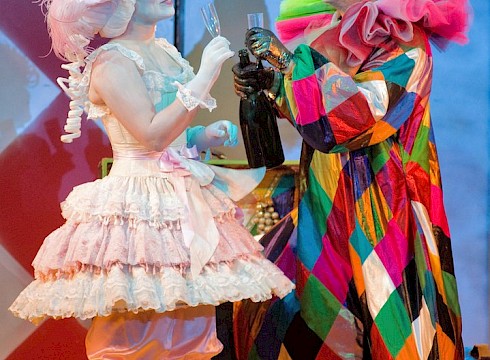
Bohemians Turn 20: Anniversary Season to Culminate in Norma with Asmik Grigorian
Sustainability in opera: how Juozas Statkevičius’s costumes were given new life a decade later
When everything hangs in the balance on stage: the invisible heroines of Dalia Ibelhauptaitė’s productions reveal the secrets behind the scenes
How Bohemians’ advertising took to the streets and changed perceptions of opera