Family and stage responsibility: Irena Milkevičūtė and Asmik Grigorian
By Sigita Ivaškaitė
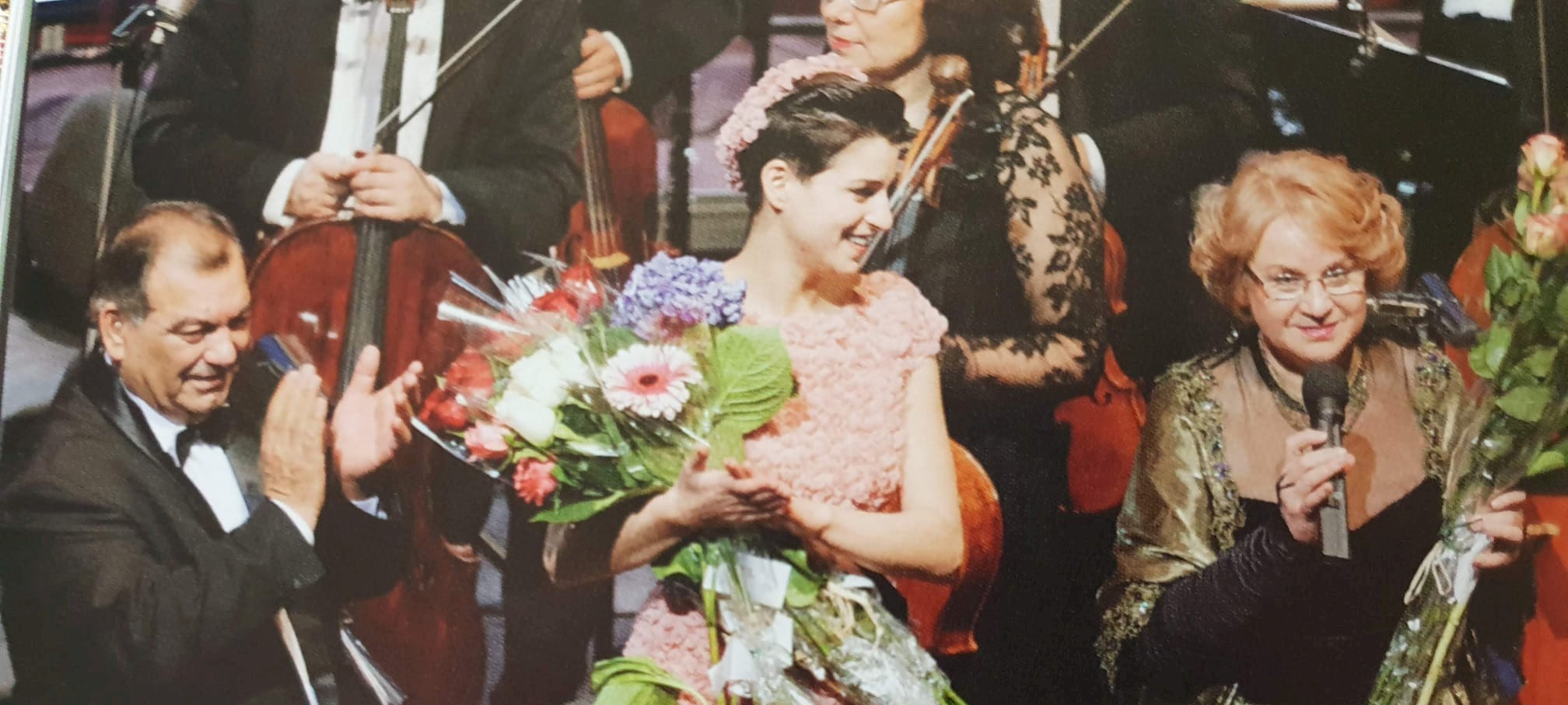
February will mark an important debut in opera soloist Asmik Grigorian’s career. In Austria’s capital, Vienna, she will perform the role of Norma for the first time in Vincenzo Bellini’s opera of the same name. For many older opera lovers in Lithuania, this role is closely associated with the unforgettable performance of Irena Milkevičūtė. She was Lithuania’s first Norma, whose singing was also heard and praised by audiences across Europe. Following in one’s parents’ footsteps is one of the most difficult paths in this profession, and Asmik knows this well. Being both the daughter of opera soloists and a mother of two children, the multiple “Best Opera Soloist” award winner admits that while creating the role of Norma, she experienced an unexpected rush of memories. At the same time, she gained a new perspective on her present, especially after recently sharing the stage in Vilnius with her son Nojus during a performance of Salome:
“I really never used to think about the connection between me and Nojus being on stage together, or about the emotions involved. It’s one thing when you’re the child yourself, but another when your own child is up there performing. I clearly remember how nervous I used to be for my parents when they were on stage, and something similar happens when you watch your own child perform. But maybe, when you’re watching him, there’s even more of a mix in that nervousness: joy, responsibility, and a strange feeling of guilt that, of course, as a child, you don’t really experience. At the same time, it feels surreal, because in your heart and your memories you’re still that same little child who once stood on stage with your own mother, and you can’t quite believe this is really happening, that time is passing so quickly. You can’t measure the emotions. And of course, when you share the stage with your family, everything is multiplied - your personal nerves, and your feelings for the other person,” says A. Grigorian.
From her own perspective, her mother reflects sensitively on the challenges of an artist’s life when raising children: “I’ve always said, if anything in life doesn’t work out for my children, it will be my fault, because I couldn’t give them enough of my time. Our profession takes so much time away from us. The voice is a very sensitive instrument, connected to the whole body. You have to become exceptionally disciplined to be able to give one hundred percent in a performance. The audience doesn’t care if your child is healthy or sick at home. When I was raising Astutė (that’s what Irena calls Asmik), there was even more responsibility - not just towards our Lithuanian audience, but also towards international juries when participating in competitions or singing abroad. I think today it’s just as hard for her to balance everything as it was for me back then.”
Which stage of your daughter’s career was the hardest for you to watch from the sidelines?
I. Milkevičūtė: “The beginning is always the hardest - both for the person on stage and for the one watching. Time and practice teach you a lot. When she graduated, she went straight to the National Opera and Ballet Theatre. Like me, her graduation role was Violetta in La Traviata, which is a real challenge for any soprano - it requires both brilliant coloratura and a lot of dramatic singing. I was truly nervous because, at that time, she still needed more technical preparation. I used to go to her performances, but I couldn’t just listen as an ordinary audience member. Even now, I tend to analyze everything when I listen, which makes it hard to experience the whole picture. Back then, it was as though I could predict in advance where she would face difficulties. But time heals and teaches you; practice puts everything into place.”
When did you finally start feeling calmer? Was there a moment when you could “let go” a little?
“It got easier once she started singing abroad, especially when she began performing in Salzburg, and when she sang Butterfly - she surpassed herself. At that point, I felt there was nothing more I could add or take away. Long before that, I had even written in my journal: ‘From now on, I can learn from her.’ Until then, I always had something to comment on, we would talk on the phone, discuss details, even exchange vocal exercises, but at that moment, I said to myself: from now on, I’ll be learning from her.”
Asmik, how did you feel growing professionally during that time?
A. Grigorian: “The hardest part was building self-worth. I can’t speak for others who grew up in similar situations, but for me, there was always this persistent sense of shame, and it took me a long time to grow out of that stage. After that, it’s still complicated, because you try to find a way to be close to your parents but still stay on your own path. It’s very difficult internally to stop comparing yourself and trying to be as good as your parents were. I don’t even know if I’ve managed to do it yet, or if I ever will, one hundred percent. But all of this lies deep inside.”
“At the same time, I now feel not only free of any shame when telling people whose daughter I am, but I also want to say it loudly, to dedicate my performances to them. I want the world to see them and remember them through me.”
“A very important moment for me was singing at La Scala in 2019. I sang, and I realized that this was a turning point. A long time ago, I used to think maybe I’d want to sing another style someday, maybe popular music, but I made a promise to myself that I would first achieve something significant in opera, so that nobody could ever say, ‘She failed in opera, so she went to sing pop.’ I thought once I achieved THAT, I could do whatever I wanted. And after singing at La Scala, I felt exactly that - that I could finally do what I wanted. But then… I realized I was already doing what I wanted to do,” she laughs.
“And the moment I truly felt I’d stepped out of my parents’ shadow came while singing The Dead City at La Scala. During the break, a man ran into my dressing room saying: ‘I’ve come to hear you three times now, I hadn’t heard of you before, but only now, on the third time, I realized you’re Geham’s daughter!’ It turned out he was one of my father’s former agents. Moments like that really remind me that I have stepped out of their shadow. Now I want the world to see my parents through my work - for them to hear and see through Norma how extraordinary my mother’s Norma was.”
Irena, is there an opera you would still like to sing together with your daughter?
“There are so many beautiful operas left to sing in dreams, but we’ve already shared quite a lot. For example, when Astutė organized my anniversary concert in Kaunas, we performed duets together - including from Norma. We also appeared together in Eugene Onegin, and I could still take on the role of the Nurse alongside her someday.”
And what roles would you wish for Asmik? Maybe one she hasn’t even thought about yet?
“There are so many beautiful operas that all I can wish her is good health so she can sing as many as possible. I’d also wish that she doesn’t overwork herself and remembers to save her energy. I know how much she takes on, and on top of that, there’s family, there are the children. Nojus is already grown, but she still takes care of him constantly.”
By the way, Nojus is currently studying at the Lithuanian Academy of Music and Theatre, just like you did back then, Asmik?
“Yes, and he’s also already been on stage with us in Onegin. Back then, he was still a child, so we had a family scene together, but he didn’t sing yet. But now, I actually sing with him! Now I’m singing together with my grandson.”
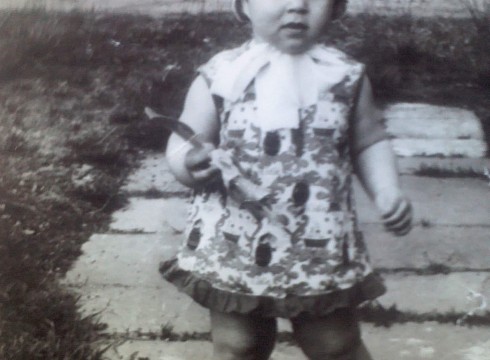
Related news
Bohemians Turn 20: Anniversary Season to Culminate in Norma with Asmik Grigorian
Sustainability in opera: how Juozas Statkevičius’s costumes were given new life a decade later
When everything hangs in the balance on stage: the invisible heroines of Dalia Ibelhauptaitė’s productions reveal the secrets behind the scenes
How Bohemians’ advertising took to the streets and changed perceptions of opera