Mission: an alternative - a conversation between musicologist V. Janatjeva and theatre critic S. Ivaškaitė about “Bohemians”
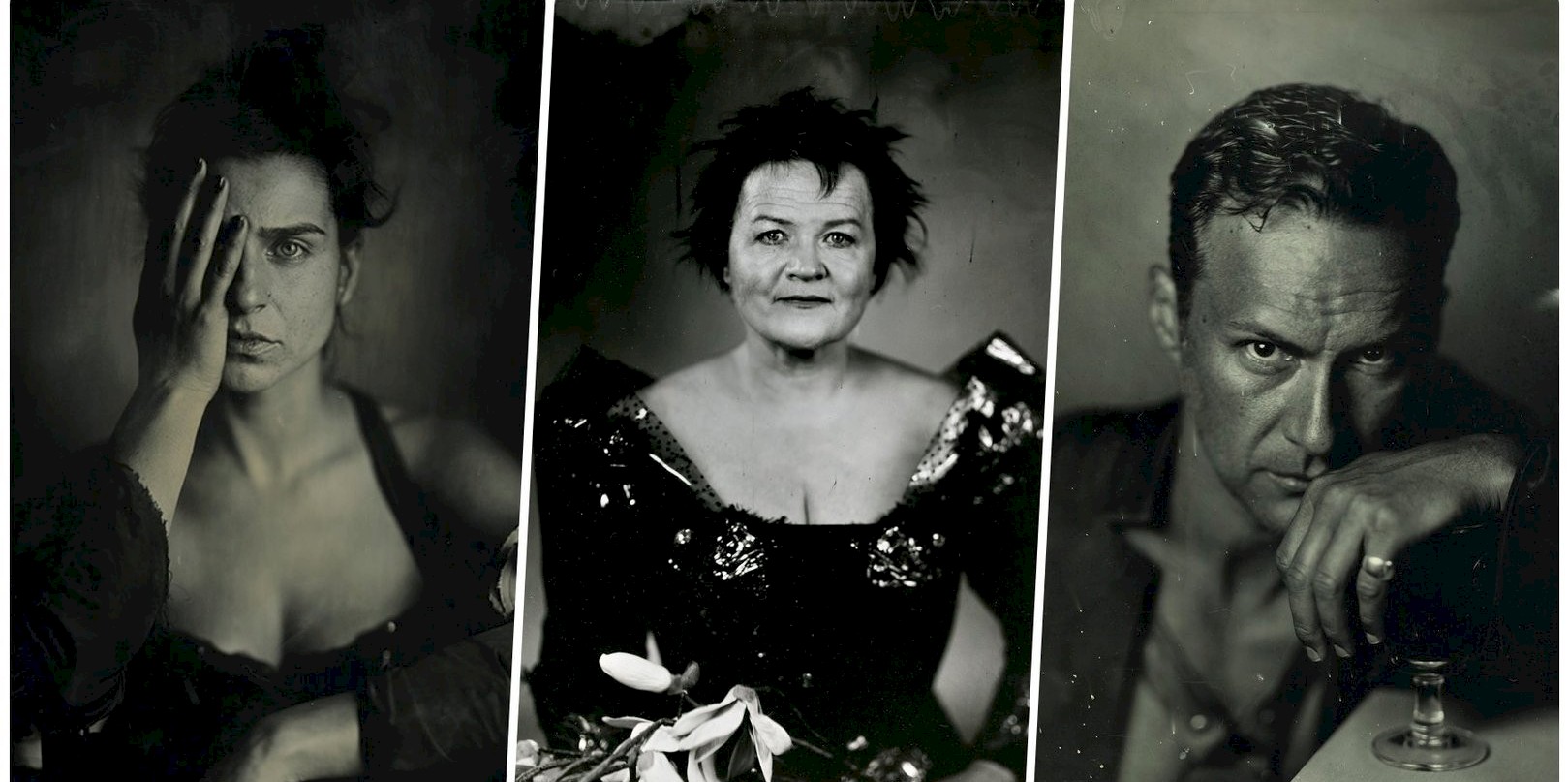
Amid all its other activities, in 2020, at the height of the pandemic, Vilnius City Opera managed to stage an exhibition at the MO Museum entitled Iš tos operos (From That Opera). It not only surveyed the creative journey of “Bohemians,” but also presented an original series of portraits by photographer Mindaugas Meškauskas.
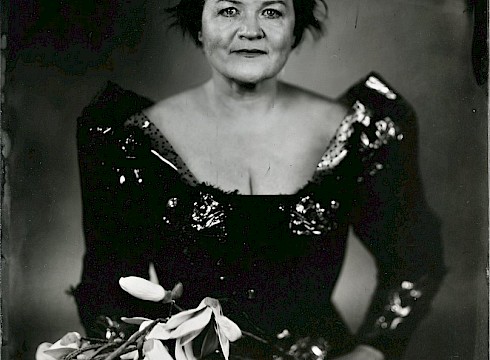
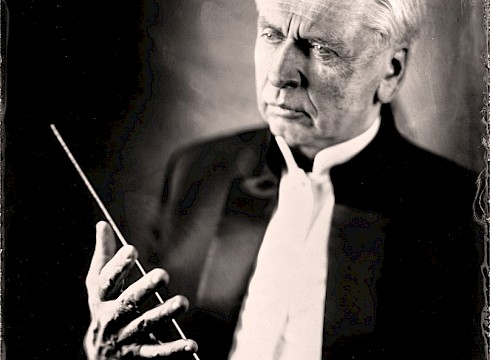
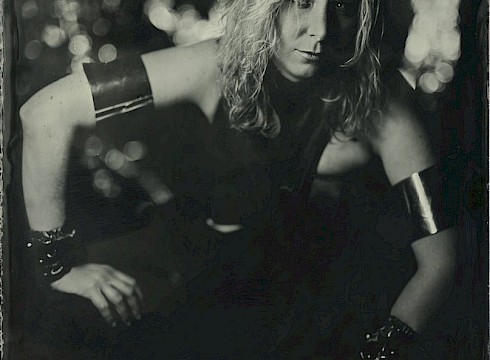
Created using the historic wet-plate collodion technique, the photographs captured the most distinctive faces of the VCO company, seemingly suspended in a state somewhere between the character and the person portraying them. This strange, almost timeless state opened up an ideal space for discussing the company’s history from the very beginning.
As researchers began examining television footage that had by then become historical, along with the extensive personal archives of the artists, one surprising fact emerged: many had already forgotten that the pioneers of the “Bohemians” movement - Dalia Ibelhauptaitė, Gintaras Rinkevičius, and Juozas Statkevičius - had themselves once been undiscovered young talents whom not everyone was willing to welcome with open arms, despite the acclaim they had received abroad.
They were often asked: “What do you need here, when you’re loved abroad?” This personal experience helped shape not only their original creative vision, but also a broader shift in attitudes towards young artists and those returning to Lithuania. In this way, an intangible home was created, where a young, different generation of opera makers could find their place.
When musicologist Veronika Janatjeva and theatre critic and dramaturg Sigita Ivaškaitė met, they posed a question: where should a story about VCO begin? Like the company’s own history, their conversation - which at the time appeared only in the exhibition booklet - remains a relevant testimony to how opera theatre in Lithuania has changed.
Veronika Janatjeva: I would unhesitatingly endorse the assertion repeated by many critics that VCO’s productions feature an almost perfect selection of voices and character types. I would also be sure to emphasize the sensitive, tireless accompaniment provided by the Lithuanian State Symphony Orchestra under the direction of Gintaras Rinkevičius.
Listening to vocalists and ensembles of such a high calibre on the Lithuanian opera stage is an unparalleled pleasure. Not every theatre can offer its audience this kind of experience - not only because of financial constraints or a shortage of professional performers, but above all because of repertoire policies and the nature of permanent employment structures, which can stifle even the boldest creative ambitions.
Dalia Ibelhauptaitė, the company’s sole director and principal producer, is responsible for almost all of VCO’s artistic decisions. And it must be said that she surprises us every time with clearly articulated staging concepts and, most importantly, with her multifaceted ability to reveal the talents of opera performers. She has an excellent understanding of people - their nature, personalities, and vocal qualities - and knows how to bring them together in pursuit of a common goal.
Sigita Ivaškaitė: Indeed, today we celebrate the success of Lithuanian soloists abroad - but let’s count how many of them began or discovered their own path in the “Bohemians” company. Asmik Grigorian states without hesitation that Ibelhauptaitė’s decision to introduce her as Musetta in La Bohème was carefully considered and entirely logical. Only by creating lyrical portraits that contrasted sharply with her mother, opera prima donna Irena Milkevičiūtė, could Grigorian forge her own unique path.
Meanwhile, VCO’s repertoire developed gradually as the young company took shape, adapting to the voices available and the performers’ level of professionalism. It is no coincidence that the artists began with what might be called “student” classics - Giacomo Puccini’s La Bohème - before moving on to the works of Wolfgang Amadeus Mozart.
V. Janatjeva: Mozart is special because his operas do not require enormous vocal power, but singers must master fine technical details, smooth and subtle transitions between sounds, and many other skills that are difficult to acquire at first - not only for singers, but for instrumentalists as well. In other words, these operas are an excellent school of classical singing. They strengthen the voice like vitamins, as Edgaras Montvidas would say.
Let me remind you that both Mozart operas staged at the Palace of Concerts and Sports - the The Magic Flute (2007) and Così fan tutte (2013) - were extraordinarily lavish in their visual expression. The first created a world of magical fantasy, filled with symbols of the ancient Egyptian cult of Isis and costumes shimmering with gold and silver. The second transported the action to a Mediterranean resort in our own time, where bon vivants lounged around the marina, showing off their luxurious clothes and jewellery...
Yet the true jewels of these productions were the young Lithuanian opera soloists: Asmik Grigorian, Ieva Prudnikovaitė, Lauryna Bendžiūnaitė, Joana Gedmintaitė, Edgaras Montvidas, Laimonas Pautienius, Egidijus Dauskurdis, Rafailas Karpis, Kostas Smoriginas, Tadas Girininkas, Viktorija Kaminskaitė, Vida Miknevičiūtė, and Jurgita Adamonytė.
Still, when considering VCO’s productions as a whole, it is worth remembering that the company did not simply spotlight young performers; it also brought in veterans of the stage, allowing them to reveal themselves in unexpected roles. Vladimir Prudnikov, for instance, had the opportunity to play a lovable patriarch of a large family in Jules Massenet’s Werther. Irena Milkevičiūtė took on the role of the Nurse in Pyotr Tchaikovsky’s Eugene Onegin - a character not entirely unfamiliar to her - and the Countess in The Queen of Spades. Meanwhile, Sigutė Stonytė, playing Larina, the head of the household, in Eugene Onegin, fulfilled a long-held dream of smoking a cigarette on stage.
S. Ivaškaitė: Somehow, everyone finds something here that draws them in...
V. Janatjeva: It is important to emphasize that “Bohemians” created outstanding productions whose fame has endured for decades, despite lacking both a suitable theatre auditorium and the rehearsal spaces they needed.
At the same time, they pursued many entirely new and exciting ideas to attract new audiences, including choosing venues that seemed almost “fatal” for opera. I am thinking of their collaboration with electronic music creators on the XYZ project (2010), presented in the then still-standing Lietuva cinema; their work with rock performers on VCO Rock (2013), staged in the abandoned Vilnius Palace of Sports and Concerts; and Marius Adomaitis’s (Ten Walls) electronic opera e-Carmen (2016), presented in the recently opened Compensa Concert Hall.
The responses were sharply divided, ranging from “the best thing I’ve ever heard” to complaints about “arrangements that mutilate the music.” Yet these projects generated considerable discussion and affected both audiences and soloists, who were forced to step outside their comfort zones. They could no longer simply sing what they had already mastered and performed many times with an orchestra. In my view, that, too, is a positive thing.
S. Ivaškaitė: I remember opera singers counting the beats in electronic music... Watching a focused soloist counting time in the almost-collapsed Lietuva cinema - and, on top of that, standing on a balcony held up by two bolts... Now that was a real alternative.
V. Janatjeva: Yes, when talking about VCO, it is impossible to avoid the word “alternative.” But it is really an alternative to the model of a repertory theatre funded by the state budget and operating in technically suitable premises. VCO’s repertoire itself, however, is quite close to the standard opera-house model, built around nineteenth-century Italian, French, and Russian operas such as La Bohème, Tosca, Faust, and Eugene Onegin.
Of course, even within this mainstream repertoire, VCO seeks out works that we rarely see - or have never seen - on Lithuanian opera stages. For example, Massenet’s Werther (2008) and Camille Saint-Saëns’s Samson and Dalila (2017) had previously been staged only at the State Theatre in the 1930s. Claude Debussy’s opera Pelléas et Mélisande (2015), meanwhile, received its first complete production in Lithuania thanks to VCO. The same is true of the twentieth-century operatic repertoire, which remains largely unexplored by our theatres. Perhaps this is why Leoš Janáček’s Káťa Kabanová(2011) made such a striking impression in the Lithuanian context.
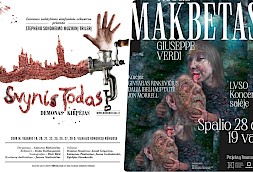
S. Ivaškaitė: And Sweeney Todd: The Demon Barber of Fleet Street - the first Lithuanian production of a Stephen Sondheim musical - became a genuine hit in every sense of the word in 2009. At the Palace of Concerts and Sports, Sweeney Todd not only brought a taste of Broadway to Vilnius, but also won praise from audiences and critics alike.
Looking back today, it seems incredible that every role in the premiere was performed by Lithuanian opera soloists, for whom the musical theatre genre was far from familiar territory. Perhaps this is what distinguishes Sweeney Todd from other Lithuanian firsts, such as Pelléas et Mélisande, in which the principal roles were performed by experienced singers who had already sung them elsewhere.
V. Janatjeva: The fact that Maestro Rinkevičius and the Lithuanian State Symphony Orchestra took on Debussy’s score deserves special attention. They were willing to tackle repertoire that was far from familiar. To be honest, during that performance I listened particularly closely to the orchestra, wondering whether musicians trained primarily in interpretations of Romantic music would be able to convey the Impressionist style.
What stayed with me, however, was the delightful impression that they had surpassed themselves, accompanying their vocal colleagues with great care. The pairing of Jevgenijus Ulanovas and Jurgita Adamonytė was simply impeccable and unforgettable.
S. Ivaškaitė: Yes, and both arrived with their parts already prepared, so the orchestra really had to rise to the occasion. Usually, when other performers work alongside true professionals, they raise their own game, too. It both challenges and inspires them. I think this happens very often at VCO.
When we consider that a theatre which receives virtually no state support and survives solely through patronage brings works into Lithuania’s cultural landscape that have not been performed on stage for almost a hundred years - or have never been performed here at all - and does so at such a high level, I think there is too little understanding of how difficult and important this work is. From the outside, people might say: “Why are you complaining when you do everything so well and so many people come to your performances?” But perhaps sometimes all that is needed is a little more support?
V. Janatjeva: After all, this is a mission, isn’t it? Or am I wrong?
S. Ivaškaitė: I think that is precisely what makes it an alternative. When they created the first La Bohème, there simply was no other functioning structure of this kind - a theatre.
V. Janatjeva: At the time, such initiatives were seen as short-lived, almost amateurish “little games.” But this kind of mission is serious professional work, involving lengthy processes and enormous investments of effort and energy, without the expectation of quick returns or overnight recognition. These people have a completely different goal. There is so much wonderful music, and there are talented people who burn with a passion for opera. They want nothing more in life than to sing and be on stage. And that stage seems to take shape beneath their feet simply because they are driven by a powerful desire and a dedication to their work.
It is unclear whether, under the conditions of our bureaucratic capitalism, a cultural sector that receives more generous state support will absorb such independent initiatives and people who believe in their mission - or whether it will not. But there is no doubt that their efforts, their constant work, and the pressure they create lead to an entirely different kind of benefit: existing infrastructure gradually begins to change, or new infrastructure emerges.
S. Ivaškaitė: It is like the butterfly effect. Clearly, after the success of La Bohème and the company’s first phase of activity more broadly, the shift towards independent performance careers gained momentum. People clearly understood and witnessed alternative ways of working, the benefits they offered, and, at the same time, the shortcomings of state theatres.
You mentioned “pressure.” I would call it competition. Healthy competition emerged, and it really did encourage people to raise their game. As long as that competition exists, some people will feel uncomfortable, some will talk about tensions and so on. But if this theatre did not exist... perhaps that is when we would truly understand the meaning of the word “alternative.” Just as removing one player from a game would reveal how the rest of the sector operates.
V. Janatjeva: Yes, but I think the “alternative” phase has now given way to something else. As musicians joke, despite the competition, they are constantly running between the two musical theatres on either side of Vilniaus Street: the Lithuanian National Opera and Ballet Theatre and the Palace of Concerts and Sports.
At one, musicians have social security and employment benefits; at the other, they have nothing of the sort. At one, they earn one kind of money; at the other, a different kind. So what is the real motivation? Clearly, it is not material. It is the opportunity for self-realization and a supportive environment in which to experience the fulfilment of creative work. VCO is constantly searching and experimenting. People are won over by the very atmosphere of its work and creative process, something members of the “Bohemians” company have mentioned in interviews more than once.
S. Ivaškaitė: It is important that VCO’s example has borne fruit in other ways, too. For the younger generation, VCO has not only helped people find their place in the world of opera, but has also helped them find a place in society. Once mysterious musicians whom people could only glimpse from afar have, thanks to “Bohemians,” become real people - artists who enchant audiences on stage with their talent and charisma, then mingle with everyone else in social life after the performance.
I find it wonderful that today we have stars not only in drama theatre, but in opera as well. It means audiences have welcomed them into their everyday lives. In this way, VCO has achieved its main goal: bringing opera closer to its audience. Of course, this creates a new challenge for the soloist: distinguishing between being a professional and becoming a star. I think many people who have been part of “Bohemians” understand this difference very well. Those who seek only fame do not last long on the opera stage, because opera demands hard and sincere work above all else.
Related news
Bohemians Turn 20: Anniversary Season to Culminate in Norma with Asmik Grigorian

Sustainability in opera: how Juozas Statkevičius’s costumes were given new life a decade later
When everything hangs in the balance on stage: the invisible heroines of Dalia Ibelhauptaitė’s productions reveal the secrets behind the scenes
How Bohemians’ advertising took to the streets and changed perceptions of opera