The gourmet productions of Vilnius City Opera
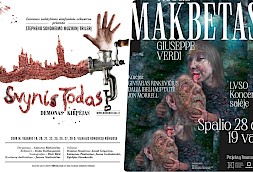
The year 2011 marked a new chapter in the history of the Bohemians. At the height of their creative momentum, following the success of La Bohème and having presented a large-scale work by a renowned composer every year - such as W. A. Mozart’s The Magic Flute or Stephen Sondheim’s Sweeney Todd: The Demon Barber of Fleet Street - the creators of Vilnius City Opera had attracted a wide audience and realised that the time had come to turn their attention to works by twentieth-century musical geniuses that had rarely been staged.
By then, audiences had not only become familiar with opera and embraced both the art form and the Bohemians as an integral part of their cultural lives, but were also ready to take on more challenging works with different musical and dramatic languages.
“There should be no such gaps in our culture,” Dalia Ibelhauptaitė firmly believes. “People tend to assume that twentieth-century operas are unappealing, with no clear plot or characters and unpleasant-sounding music. We want to dispel that myth. In fact, these are deeply emotional, compelling and moving works, capable of touching anyone’s soul and feelings.”
Guided by these ideas, Dalia Ibelhauptaitė and Gintaras Rinkevičius compiled a list of works worthy of a musical intellectual’s attention and named it the “Gourmet Series”.
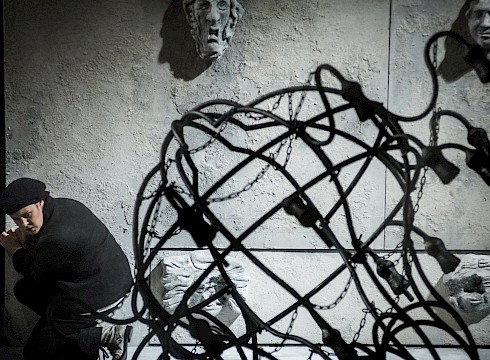
Vilnius City Opera ventured into the work of Leoš Janáček, a composer virtually unknown in Lithuania whose operas had never been staged here, and introduced audiences to Káťa Kabanová. This was the production that launched the Gourmet Series. “Minimal scenery - maximum emotion” was the motto chosen by the creative team, who placed Káťa Kabanováin an abstract, dark visual world and allowed the opera’s passions to unfold within it. The title role of Káťa was performed by the exceptionally talented Aušrinė Stundytė, who was still unfamiliar to Lithuanian audiences at the time but has since appeared on prestigious opera stages.
L. Janáček himself was already well established in European opera houses, with his works regularly featured in their repertoires. Prominent, visionary directors such as Calixto Bieito have chosen to bring his operas to the stage. At most opera houses across the continent, one can find at least one or two of his works. Against this backdrop, presenting his music alongside Aušrinė Stundytė’s talent seemed more than logical.
The soprano specialises in the music of this period and had already performed roles in Janáček’s operas on several occasions. Káťa Kabanová proved a perfect match for the company, the creative team and Aušrinė herself, allowing everyone to immerse themselves fully in the world of this distinctive musical language. Vilnius City Opera’s enthusiasm, combined with the extraordinary talent of a singer who performs at venues such as the Royal Opera House, Covent Garden, the Berlin State Opera, the Paris National Opera, the Vienna State Opera and many others, brought audiences not just their first encounter with the work, but an experience of the highest quality.
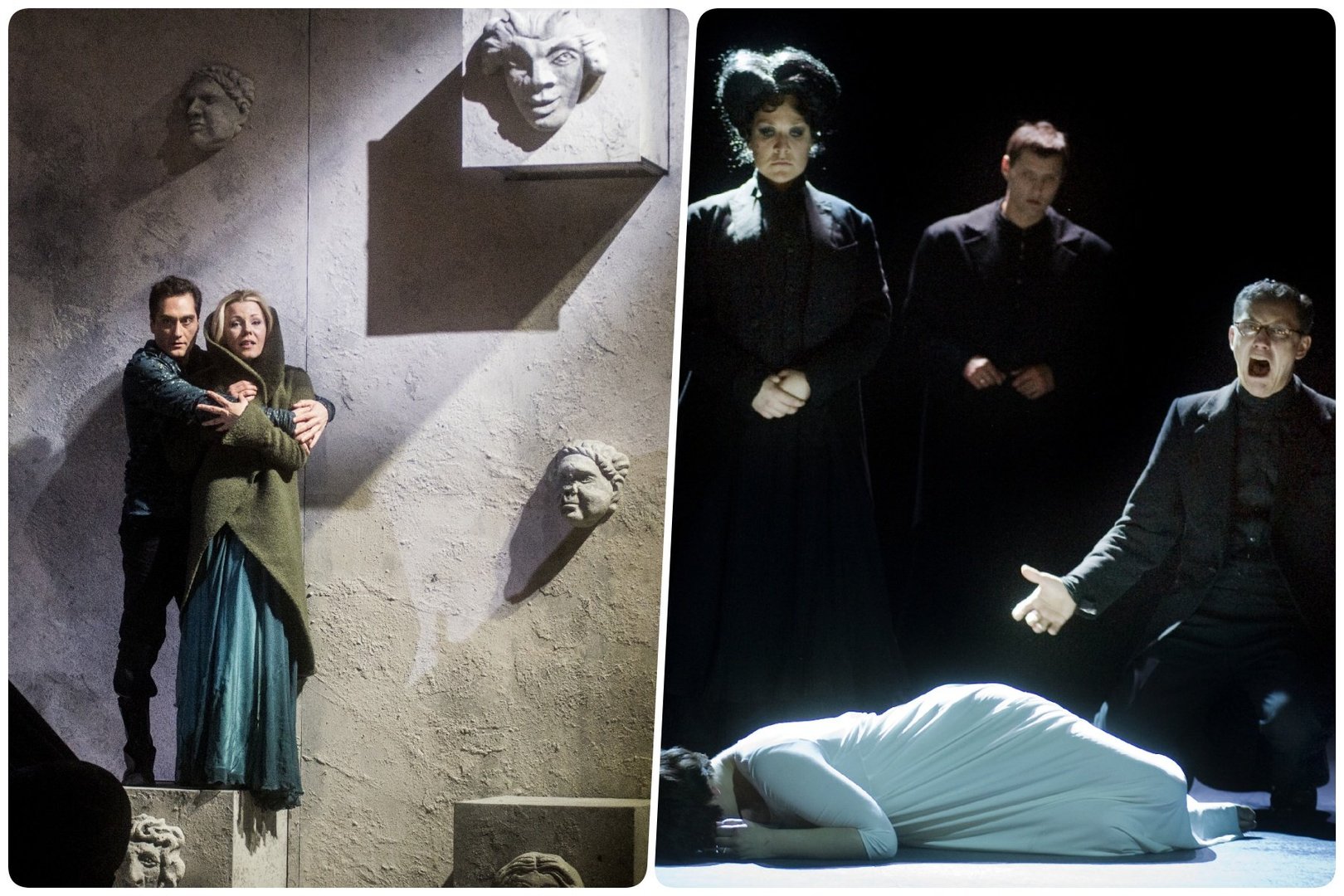
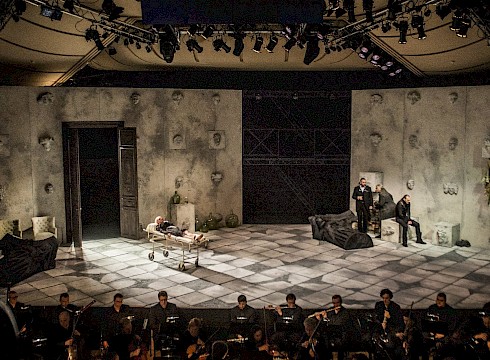
In 2015, Vilnius City Opera chose to present another exceptional opera: Claude Debussy’s Pelléas et Mélisande. It became only the second production of this work in Lithuania. Pelléas et Mélisande is one of the most important and complex operas of the twentieth century, regarded as a coveted work by some of the world’s most celebrated conductors. It is an intimate, impressionistic and deeply psychological family drama, charged with emotion and rich in inner meaning. The opera unfolds like a multilayered symbolist drama, worthy of its original playwright, the French writer Maurice Maeterlinck.
The symbolist story and impressionistic flow of the music contain exceptionally demanding vocal parts that not every soloist can master. If an emergency arose at any opera house and a replacement performer had to be found at the last minute, the pool of suitable candidates would be very small. Having a Mélisande of their own in Jurgita Adamonytė was therefore an extraordinary opportunity. She had prepared the role in Great Britain, and after the premiere, British critics even dubbed her “the Lithuanian Ingrid Bergman”.
It would have been unforgivable to let such an opportunity go to waste. The Vilnius City Opera team therefore pooled all its resources to assemble an exceptional cast, led by Jurgita Adamonytė, whose unique voice and acting talent had captivated audiences from London’s Royal Opera House to the opera stages of Tokyo. Now she could introduce herself and reveal her artistry to audiences in her homeland.
The Vilnius City Opera Gourmet Series presented a minimalist, intimate yet dramatically expressive interpretation of the opera. Pelléas et Mélisande is an opera for adults, like a secret fantasy steeped in danger, passion and desire. At its centre is a young woman whose beauty, innocence, elegance and radiance are breathtaking, yet who conceals within herself the power to create chaos and destruction. By the end of the opera, there is not a single man left who has not, in one way or another, confessed his love for Mélisande. Debussy’s music, divine in its beauty, is deceptive: behind it lies an intriguing plot and a powerful drama. After all, life itself often turns out to be very different from how it first appeared.
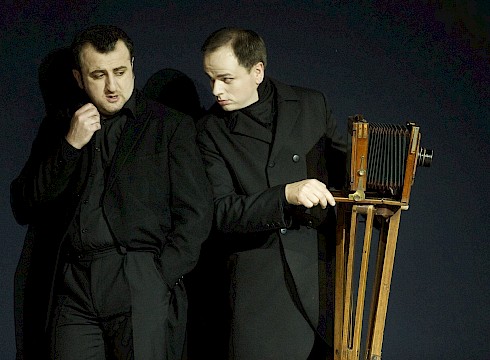
The creative process behind these operas was complex, as was the task of attracting audiences, which demanded considerable time and effort from the management team. Nevertheless, these projects later gave rise to productions such as Samson and Delilah and Salome, featuring Asmik Grigorian, which shook the newly renovated Lithuanian State Symphony Orchestra concert hall.
“Our work and our attempts to establish a distinctive line of operatic repertoire revealed a painful truth: these composers attract significantly smaller audiences than Verdi or Puccini. Music of this kind needs to exist in the repertoires of our country’s theatres, nurturing audiences’ tastes, raising their musical intelligence and, of course, broadening the range of works on offer. Financially, however, this is affordable only for theatres fully supported by the state. “Companies like ours can stage such a work and then perform it only once or twice. It is no coincidence that, looking across Europe, we see that these composers are staged and sustained almost exclusively within the repertoires of state-funded opera houses, where they fulfil an important educational mission.” Dalia Ibelhauptaitė shares these reflections while revealing that the Gourmet Series is far from complete. Whether the company will ever have the opportunity to continue it, however, remains uncertain.
Related news
Bohemians Turn 20: Anniversary Season to Culminate in Norma with Asmik Grigorian

Sustainability in opera: how Juozas Statkevičius’s costumes were given new life a decade later
When everything hangs in the balance on stage: the invisible heroines of Dalia Ibelhauptaitė’s productions reveal the secrets behind the scenes
How Bohemians’ advertising took to the streets and changed perceptions of opera