Designer Jon Morrell on working with “Bohemians”: “Dalia awakens the teenager in me”
Deimantė Bulbenkaitė
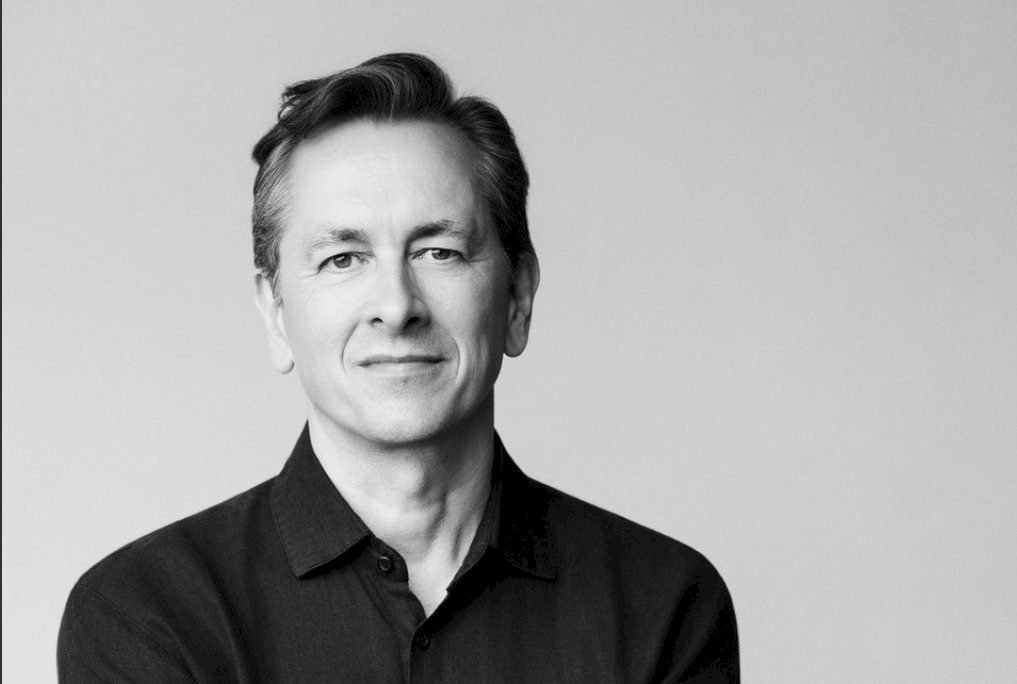
Madrid is hot - both literally and figuratively. We speak while British set and costume designer Jon Morrell is hard at work preparing for a premiere, yet even the Spanish heat seems to have no effect on his style: he appears on screen dressed in black. In fact, black in a designer’s wardrobe should not be mistaken for restraint or laziness. It is more like a uniform, essential in a line of work filled with colour, high heels, corsets, chainmail and all kinds of stories brought to life onstage.
A Laurence Olivier Award winner, Morrell had ties to Lithuania even before joining the creative team behind “Bohemians”: his partner is Lithuanian, so Vilnius was already familiar to him. He saw some of the company’s earliest productions here, and before long Dalia Ibelhauptaitė brought him into the fold herself. From Werther to Il Trovatore, Faust, Tosca, Macbeth and other productions, Morrell became one of the people who helped shape the aesthetic language of Vilnius City Opera.
“Dalia awakens the teenager in me,” Morrell says. The phrase perfectly captures not only their creative relationship, but also his entire experience in Vilnius: plenty of improvisation, very little time, limited resources - but an extraordinary amount of imagination. That is what we talk about one September morning.
- Your connection with Vilnius began before you started working with “Bohemians”. How did you meet Dalia, and how did you become part of her creative team?
- To be honest, I can’t even remember exactly when we first met. I already knew about Dalia through her work in the United Kingdom. We had mutual friends in the theatre and opera worlds, and my partner is Lithuanian, so I was travelling to Lithuania myself. We got to know each other better in London, and I became friends with Dalia and Dexter Fletcher. Then I saw La Bohème in Vilnius.
One day, Dalia asked if I would be interested in designing the set for Werther. How did she persuade me? At gunpoint! [Laughs.] No, I’m joking. She simply made the offer, I thought it might be interesting, and I could see that I had the time, so everything developed quite naturally. Then I found myself caught up in the utterly mad process through which productions were realised in Lithuania back then. You would get into a car and drive across the whole of Vilnius looking for props or a sewing workshop, with very little idea where you were going or what you would find when you got there. Since I didn’t speak the language, it felt like an extraordinary adventure.
- You have worked with many major opera institutions. From that perspective, what made the early “Bohemians” different? What kind of creative freedom or risk-taking was easier to embrace in Vilnius than in a large theatre?
- There’s plenty of chaos in large institutions, too. [Laughs.] But when I first worked in Vilnius, I hardly knew anyone. I didn’t know the audience and didn’t have many friends there, so in a sense, I felt no pressure. When you work in your own city, among people you know, you feel much more observed. At first, working in Vilnius was quite liberating in that respect.
The Congress Concert Hall itself, along with the company’s way of working, also had an experimental energy. Sometimes you take a risk and get it right; sometimes you don’t. Some ideas emerged without anyone knowing whether they would work at all, and we found solutions along the way.
It is also important to understand that, in the case of Vilnius City Opera, Dalia essentially is the company. In a large institution, when you submit a project, it enters a system: layers of management, budgets, approvals. Later, changing something becomes difficult. Here, the person making the decisions is right there beside you. If we come up with a crazy design idea, Dalia can turn the whole ship around to accommodate it.
- What does the beginning of your creative process together usually look like? Does Dalia arrive with a clear vision, or do you discover the direction together?
- Our first conversations can go on for quite a long time, covering absolutely everything except the design itself. [Laughs.] We often start with what we don’t want. How should we avoid doing this? Which direction do we not want to take? Sometimes we look at images straight away; sometimes we meet, talk for ages and decide nothing at all. Then I go home, put the material together and come back again. Our first conversations can go on for quite a long time, covering absolutely everything except the design itself.
Dalia has a very strong visual sensibility and is deeply interested in contemporary art, culture and design. I like the fact that she can show me something I haven’t seen before and say, “Look, perhaps this could be a starting point.” I can guarantee you that not all directors work that way.
I also like the pace. With other institutions, a project might begin a year or eighteen months before the premiere, whereas with Vilnius City Opera, everything often fits into about six months. That actually suits me better - I like to start and finish in one go. When a project drags on for months and months, you lose momentum and end up having to check old emails to remember who decided what.
- Your relationship with clothing began very early and was rooted in a do-it-yourself philosophy. As a teenager, you made things from found objects and old curtains, and experimented with Gothic aesthetics. How did clothing become a means of self-expression for you?
- My mother sewed, and my grandmother did a great deal of knitting, so I started knitting and crocheting myself as a child. I was always asking my mother to sew something for me and my grandmother to knit something, and I would explain exactly what I wanted. A rather demanding child!
When I was a teenager, I couldn’t see the point of spending my holidays earning money in a café or a shop. We moved into a house with a garage, and I persuaded my parents to let me turn it into a sort of studio. A friend and I started selling things at flea markets. In those days, you could still find wonderful objects from the 1940s and 1950s that other people regarded as nothing but junk.
Then we started making clothes ourselves, too. We would buy old 1950s evening dresses and, let’s be honest, transform them rather badly into New Romantic-style outfits. We packed everything into a few suitcases, went to alternative shops in Sheffield and simply asked whether anyone would like to buy our clothes. I’m not sure I would have the same nerve today. But people bought them - and even placed further orders. Some were white, almost bridal dresses, made mostly from net curtains.
Gradually, I began dyeing and cutting my own hair, sewing my own clothes and rummaging through my grandparents’ wardrobes. My grandfather gave me several 1940s coats, which I wore myself. My family probably thought I was a little crazy and that there was definitely something wrong with me.
- How much of that teenager remains in your work today? And are you influenced only by your youthful interests and the history of costume, which you inevitably encounter, or by contemporary fashion as well?
- I think Dalia awakens the teenager in me. Artists are always trying, in one way or another, to return to childhood and recover a certain innocence. Working with Dalia encourages that particularly strongly, because the company itself demands improvisation: we try to make a lot out of very little. It’s like going back to that garage, with an old sewing machine and a few tools, and thinking: how can I turn this into that?
Fashion is, of course, an enormous source of ideas and inspiration for me. Sometimes an image I come across becomes a reference for an idea; sometimes I deconstruct it and transform it. I’m particularly drawn to Japanese designers - Yohji Yamamoto and Rei Kawakubo of Comme des Garçons. They know how to rethink clothing and redefine the relationship between the body and the silhouette. Their fashion is highly sculptural and, at the same time, theatrical.
In general, following fashion is a bit like reading the news. It is directly connected to what is happening in society. In theatre, you cannot ignore the present, even when you are creating a historical world. Sometimes you want to make the connection with today very direct; at other times, it is much more interesting to leave it metaphorical and less obvious.
For example, practical circumstances also played a role in Macbeth. Singers sometimes arrive for concert-style productions just three days before the premiere, which means there simply isn’t time for proper fittings. Some garments were bought and altered: you cut the sleeves off a coat, make separate pieces that can be assembled quickly, and so on. I jokingly call it an IKEA costume - the aesthetic language emerges partly out of necessity.
- You have said that the first fittings are among the most exciting and, at the same time, most frightening moments of the process. What actually happens when a sketch acquires a body for the first time?
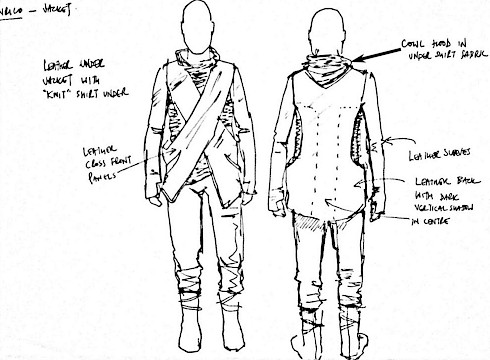
- Fittings, fittings, fittings! [Laughs.] It’s the moment when everything becomes real, but also the first time you might discover that something simply doesn’t work. The fabric behaves differently from what you expected, the maker has interpreted your idea differently, you have made a bad decision, or the performer’s body is not what you imagined. And you have twenty minutes.
Sometimes it feels as though you have to save the world in those few minutes. In a large institution, I would have a tailor, an assistant and a costume supervisor around me. In Vilnius, there were often too many fittings happening at once, so I would be standing there with pins in my hand, altering the garment myself. You also need diplomacy, because you are looking at someone’s body in a very practical way, while, understandably, that body is something deeply personal to the performer.
But there are wonderful moments, too, when the right shoes or a corset are enough to transform someone. They straighten their back, stand differently and begin to think about the character differently. A costume can give someone a sense of character before they have done a single thing onstage.
- It is interesting that you talk about costumes as objects that seem to lose their life without a body inside them. What is your relationship with old stage costumes, archives and preserving objects?
- I’m rather heartless. [Laughs.] Once a production is over, it’s over for me. If a costume can be reused, altered or cut up, wonderful. There is a lot of talk about sustainability these days, but in theatre we have always practised it, because the costume store was invariably the first place you would go when trying to save money.
Old costumes without bodies inside them seem rather sad to me. Until someone wears them, they are almost lifeless. Empty clothes only emphasise the absence of the person, the end of a particular era or the conclusion of a creative process.
I’m not inclined to keep costumes for myself. The only exception was a pair of glittering silver men’s high heels from an old production. At the time, I shared a studio with another designer, and we wore the same shoe size. Whenever one of us was having a terrible day and everything seemed far too serious, the other would say, “Right, you’re going to work in those shoes for the next half-hour.” You would put on the silver heels, and your mood inevitably changed. In a way, it was therapy. Clothes really do have magic.
- Of all the productions you have created with Vilnius City Opera, which do you remember with the greatest nostalgia? And which demanded the most from you?
- Probably Il Trovatore. We created almost everything from scratch, and it was my first truly large-scale costume production in Vilnius. I took risks and had no idea how everything would ultimately look, but I was proud of the result. There were some really beautiful things in it, and the people I worked with in Lithuania for the first time did an extraordinary job.
That production nearly killed me, though. [Laughs.] By the end, I was so exhausted and stressed that I had to seek medical attention and even go to hospital. There were simply too few of us for a production on that scale - practically the entire costume department consisted of me and the wonderful Elvita.
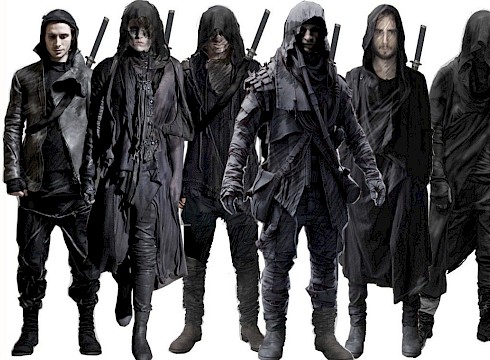
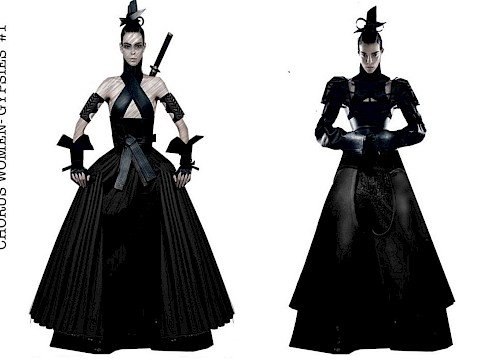
But one of the things I liked about Il Trovatore was that we moved away from straightforward historical realism. We wanted to create a very strong aesthetic world. The chorus consisted of people of all kinds of body types, ages and personalities, and we needed to transform them into soldiers, outsiders and aristocrats. In the end, the production acquired something of the energy of manga, cosplay and video games. The performers really inhabited those costumes, and that was precisely why it worked.
- The history of “Bohemians” seems to have been full of situations in which solutions had to be found along the way. What stories do you still tell your friends when you want them to understand the company’s working methods?
- One of my strongest memories is of sitting on the floor backstage, surrounded by pins, while people walked past me one after another. I had no idea who they were. I was simply sitting at their feet, adjusting their hems like someone on a production line between rehearsals. Looking back, I think: that was so far removed from the way I work with other companies.
And, of course, there was the wonderful Elvita. We would drive all over Vilnius visiting tailors and craftspeople, running late everywhere and never finding anywhere to park. I still say she is the best person at reversing a car I have ever met. [Laughs.] You drive into a courtyard full of enormous potholes, there’s nowhere to turn around, and she reverses us out for hundreds of metres while we’re thinking: we won’t get anything done in time; nothing is going to be ready.
For Tosca, we needed about ten 1940s-style hats at one point, and we no longer had anyone who could make them. We found a very conservative hat shop in a Vilnius shopping centre. Its window display featured very ordinary styles suitable for weddings. I thought: if this woman can make those, she can make something for us, too. We turned up with my sketches, which were a long way from anything in her window display, and practically backed her into a corner: “This is for Dalia, this is for Vilnius City Opera, and we have no other options!” She looked absolutely terrified, but she made the hats. And they were perfectly fine. Perhaps she retired after our visit. [Laughs.]
- And finally, the same question I ask everyone I interview for this series: after so many years and so many different productions, what does being one of the “Bohemians” mean to you personally? What keeps bringing you back to Vilnius?
- Dalia and her gun! [Laughs.] I’m joking, I’m joking. It’s the people. Elvita is an incredibly important creative partner for me. There’s Daiva, the seamstress who does fantastic work; Vaiva from Kaunas, who sews so many of the women’s costumes; and everyone else. Every time you show them a project, you see it on their faces: “No chance. I don’t have time.” And then they do it anyway. And they do it brilliantly.
I’m always impressed by how open the team is to new ideas and how willing they are to experiment. I think that is the essence of all my work with Vilnius City Opera. If I had to sum up what being one of the “Bohemians” means to me in a single phrase, I would say: creative freedom.
Related news
Bohemians Turn 20: Anniversary Season to Culminate in Norma with Asmik Grigorian

Sustainability in opera: how Juozas Statkevičius’s costumes were given new life a decade later
When everything hangs in the balance on stage: the invisible heroines of Dalia Ibelhauptaitė’s productions reveal the secrets behind the scenes
How Bohemians’ advertising took to the streets and changed perceptions of opera