Dalia Ibelhauptaitė: ”Bohemians”formed in my mind as Dalia Tamulevičiūtė’s ‘Ten’”
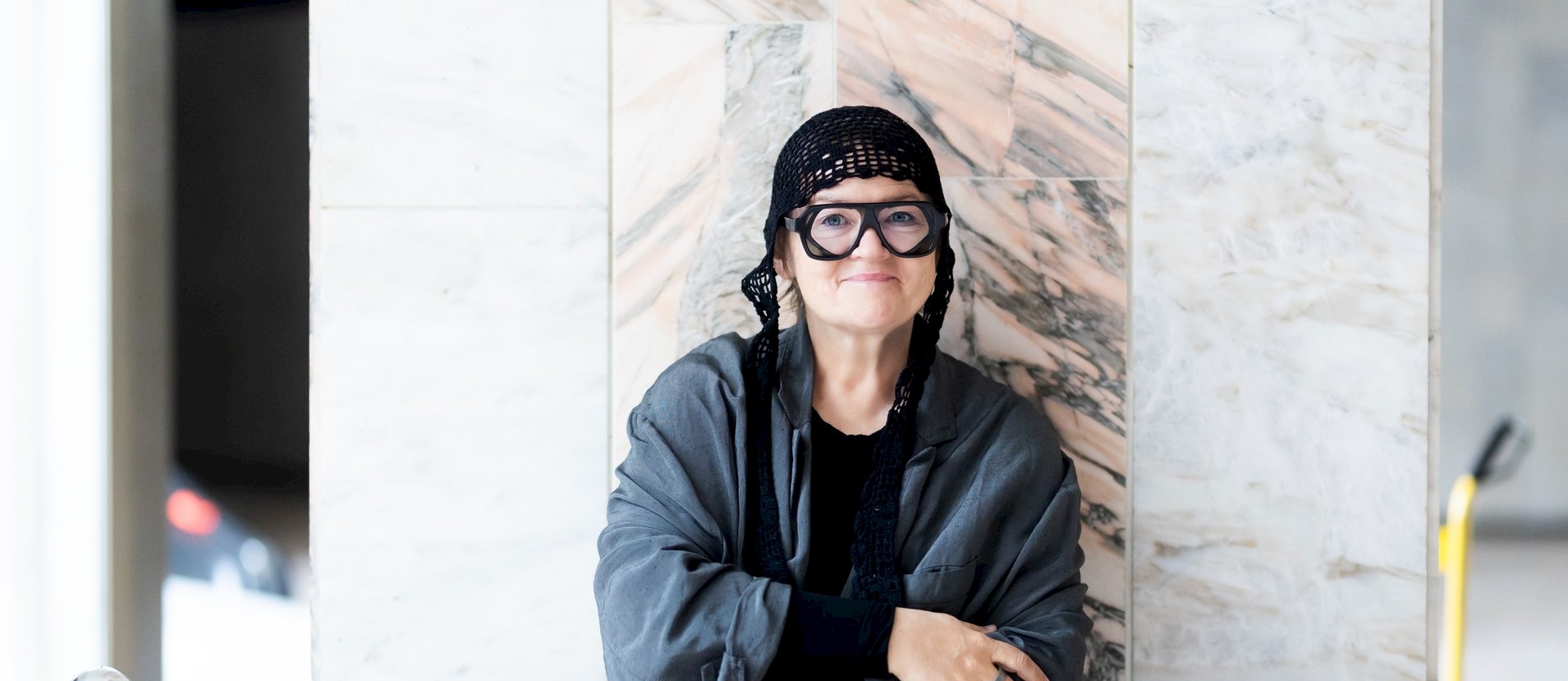
Dalia Ibelhauptaitė, a theatre and opera director and producer who grew up in the world of theatre shaped by Eimuntas Nekrošius and Dalia Tamulevičiūtė, never thought she would one day direct operas. Fate decided otherwise: her first invitation took her to Italy, and later she returned to Lithuania determined to give young soloists what they did not have – the opportunity to grow, perform leading roles and become competitive, equal partners on Western stages.
D. Ibelhauptaitė talks to journalist Gražina Michnevičiūtė about her first steps into the world of opera, the teachers who shaped her approach to theatre, and why in opera you can never sit on two chairs at once.
- Dalia, what was your first encounter with opera?
- For that, I have to thank my mother, who first took me to the theatre when I was about two years old. From that occasion, I remember only a very vivid red light on the stage – perhaps even from my mother’s telling of the story – and how some kind of sword was descending from above. That red light frightened me terribly, so I started screaming, and my mother had to hurry me out of the auditorium. That was my first impression of theatre.
My mother absolutely loved theatre and music, and when she returned to Vilnius after deportation, she tried to go to the opera theatre at least several times a month. She would take me to the Sunday performances at 12 noon. When I turned seven, she began taking me to evening performances as well. My mother was in love with Geham Grigorian, and Virgilijus Noreika was second on her list of favourite soloists. I don’t know how many times I saw La Traviata in my childhood – I could probably sing half the opera.
The opera theatre entered my life precisely through my mother’s love of theatre. We also had a great privilege because my mother’s brother, Uncle Vytas, a horn player, worked in the opera orchestra and could get tickets for my mother. Our family was not well-off, so these tickets from my uncle were a great help to us and allowed us to see many more performances, sometimes several times.
Later, there was even more theatre in my life. I studied piano at the Balys Dvarionas Music School, so I also went to the theatre because I had to hear all the works we discussed during our music history lessons.
- Opera performances and concerts at the Philharmonic were soon joined by drama theatre. What did your encounters with two legendary directors, Eimuntas Nekrošius and Dalia Tamulevičiūtė, give you?
- The great passion of my youth was Eimuntas Nekrošius’s productions and the Youth Theatre. The Youth Theatre’s group of ten actors, brought together by Dalia Tamulevičiūtė (the “ten” of actors from D. Tamulevičiūtė’s course at the State Conservatory in 1975: Kristina Kazlauskaitė, Irena Kriauzaitė, Algirdas Latėnas, Dalia Overaitė, Vidas Petkevičius, Violeta Podoskaitė, Kostas Smoriginas, Dalia Storyk, Arūnas Storpirštis and Remigijus Vilkaitis – editor’s note), was like a family. At least, that was how it looked from the outside.
That sense of family in the theatre made a huge impression on me. They had a completely different quality of faith in and trust in one another, an ideal environment for creativity and a profound understanding of one another. I really wanted to be part of that world. I think that, consciously and subconsciously, the “Bohemians” formed in my mind as Dalia Tamulevičiūtė’s “ten”. Dalia was my teacher; her theatre ethics and working style shaped me.
She was a grand dame of Lithuanian theatre who not only nurtured many brilliant actors but also gave them the freedom to be themselves. All the actors in the “ten” were so different, each one an individual. Tamulevičiūtė had an enormous amount of strength and power within her. At the Youth Theatre, she nurtured such a great and unique artist as Eimuntas Nekrošius. And, of course, Nekrošius became my ideal of directing and theatre.
- You began communicating with Dalia Tamulevičiūtė while you were still at school. Do you remember how you first met?
- I met Tamulevičiūtė when I was about fifteen. She lived in Žirmūnai, just like me. Dalia would invite me over to her place – she lived one bus stop further down the route than I did. I remember that we would drink tea, she smoked a great deal, and she would tell me stories about her studies and her work. Watching her, I saw an extraordinarily strong person. Tamulevičiūtė had an incredibly strong will, a sharp mind and the ability to endure a great deal. I saw an example of what that looked like. I learned discipline from her and developed my own willpower.
I also met Eimuntas Nekrošius while I was still at school, and I could go to his rehearsals. I don’t know how many times I watched his productions: The Square, Love and Death in Verona, Uncle Vanya, Pirosmani, Pirosmani.
My father and I would stand in line outside the Youth Theatre box office from six in the morning so that we could buy tickets for the following month’s performances. We usually bought just one at a time because my parents didn’t have much money.
When I finished school, back in Soviet times, there were no theatre directing studies in Lithuania. If you wanted to work in theatre and study directing, there was only one choice – to go either to Leningrad (now St Petersburg – editor’s note) or to Moscow. Both Dalia and Eimuntas told me: if you want to study directing, you have to go to Moscow.
They didn’t try to dissuade me, but Eimuntas did say that directing was a profession requiring great solitude and that it would be terribly difficult. He also said that if you could live without it, then you should. I didn’t get in on my first attempt, and when I returned to Vilnius, I absolutely did not want to pursue any other studies, even though my mother had prepared another option for me.
- And what was the option your mother had prepared for you?
- Journalism. Since I had been writing for Moksleivis and Komjaunimo tiesa since the age of thirteen, my mother thought it would be the best choice for me. I took part in writing competitions and wrote many different articles, sometimes using a pseudonym.
- I’m very curious, what pseudonym did you use?
- Indrė Girėnaitė. I took Girėnaitė from “Darius and Girėnas”. And Indrė was a feminine version of Indra, the powerful ancient Indian mythological god of lightning, thunder and rain. In my youth, I loved mythological stories and was very dramatic (laughs).
- Nevertheless, you didn’t choose another course of study, and on your third attempt you got into theatre directing in Moscow and completed your studies. You directed several productions in London and later in New York. How did your path lead to opera?
- I never thought I would direct opera because I had no personal example to follow. I knew that Vlada Mikštaitė was an opera director, but I didn’t know her (V. Mikštaitė was a director at the Lithuanian Opera and Ballet Theatre from 1963 to 1969 and from 1975 to 1990 – editor’s note).
In fact, the first person who invited me to direct an opera was British producer Adam Pollock, the founder of the Musica nel Chiostro summer festival in Batignano, Italy.
He invited me to stage Wolfgang Amadeus Mozart’s Don Giovanni together with Maria Björnson, the most famous stage designer in England at the time. That opera was my baptism. It was 1994. In theatre, you don’t begin directing drama productions with Hamlet, so in my view, your first directing job in opera cannot begin with Don Giovanni either. But Adam Pollock had seen my theatre productions in London, and he thought I was good at handling large-scale productions and large numbers of people on stage, so I could direct opera.
To tell the truth, Maria Björnson had also come to see my production of The Gamblers at the Tricycle Theatre. It starred Mark Rylance, now the winner of an Oscar and three Tony Awards, and the famous film star Phil Daniels. Maria saw The Gamblers, went to Adam and said, “I want to work with this woman.” That is how I ended up at the Musica nel Chiostrofestival in Batignano, which, incidentally, introduced a number of Britain’s most serious opera directors to the world of opera, including Graham Vick, Richard Jones and others.
I was the first female director to stage a production at this festival, which celebrated its twentieth anniversary in 1994. At that time, there were practically no women directors in the world of opera.
- Your first opera as a director was a work by Mozart, while you chose Verdi for your first opera production in Lithuania. Conductors often have their favourite composers, but who are your favourites as an opera director?
- Probably my favourite composer in my youth was Verdi, because of his musical drama, broad brushstrokes, grand scale and large choruses. It matched my vibe. Verdi was great, and I felt very small in comparison with him.
At first, I wanted to stage as much Verdi as possible. Before coming to Lithuania, I had already staged Verdi’s Rigoletto in London. That is why my first two operas in Lithuania were Verdi’s Un ballo in maschera and La forza del destino.
I had bigger plans for Verdi, but life forced me to open my eyes and see a wonderful truth. We had many young talents who had no place in the national opera theatre at the time, while those who worked there did not have many leading roles.
I wanted to create an alternative and give these young people the opportunity to perform prominent leading roles, acquire a solid acting foundation, discover freedom on stage and dare to do more than they themselves imagined they were capable of. I wanted them to be like film actors, because I knew that if they ever found themselves in the West, they would have to be competitive – excellent actors, excellent singers and able to use their bodies as a means of expression.
The best opera ever written for young people is Giacomo Puccini’s La Bohème. There was never any question about which work we would choose for our first production with young soloists. Of course, it was La Bohème. We wanted to bring all these soloists together in one place, celebrate them and see what this gathering of young people might grow into.
After La Bohème, much to my own surprise, I became something like an artistic director. In theatre, a director can choose whatever they want to stage, but when you have your own ensemble, you are first and foremost responsible for ensuring that its members have roles, that you make use of their abilities, help them grow and nurture them.
That is why the next work we chose was Mozart’s The Magic Flute, because the “Bohemians” were now ready to prepare roles in this opera. Let us not forget that Mozart is the complete opposite of Puccini. I wanted the young soloists to grow through a variety of music, and our choice of works was not some kind of egotistical choice based on what Ibelhauptaitė liked.
We chose what suited the “Bohemians” and their voices. We staged works that allowed them to develop professionally and take them to the next level. We took on Verdi’s “Il Trovatore” when we were certain that all our soloists who had sung Puccini had now grown enough to sing Verdi. Exactly ten years after the founding of La Bohème.
- Perhaps the soloists could also suggest works they would like to sing?
- Yes, that was another way we chose works: our soloists would bring us an opera they wanted to sing.
Edgaras Montvidas suggested Jules Massenet’s Werther. Charles Gounod’s Faust also came about through conversations with Edgaras. We decided to stage Manon Lescaut because we had Asmik Grigorian. These were interesting decisions. And, of course, we staged Leoš Janáček’s Káťa Kabanová because Aušrinė Stundytė really wanted to work with us. She is an absolute expert on Janáček’s operas in Europe, and the best directors in the world who stage these operas chose to work with her.
Gintaras (conductor Gintaras Rinkevičius – editor’s note) and I also chose composers together to ensure that the music would be as varied as possible. That is how the French composers Saint-Saëns and Debussy came into the picture. We wanted music that was rarely heard, operas that had never been staged, such as Claude Debussy’s Pelléas et Mélisande.
It was also important to me that the scenographer Dick Bird, lighting designer Peter Mumford and costume designers Juozas Statkevičius and Jon Morrell, who worked with us, could create different periods and different aesthetics. I am not a director of a single style, like Calixto Bieito or David Alden, who always create productions in the same style. It is important to me to keep creating new worlds so that audiences can see the most diverse visual styles on stage.
I often think about the theatrical phenomenon that emerged at the Youth Theatre through Eimuntas Nekrošius and Dalia Tamulevičiūtė. Nekrošius was a director who created productions, while Tamulevičiūtė was a director who nurtured talent, nurtured people, nurtured the audience and nurtured the world. I think I identify more with Dalia Tamulevičiūtė – I wanted to nurture. If I had wanted a different path, I would never have returned to Lithuania. In 2004, when my production of Šveikas was nominated for a Drama League Award in New York as the best production of the year, I could have stayed there and had a completely different career.
- Have you never wanted to return to New York?
- There is one golden rule: you cannot sit on two chairs at once, because then you will not do either thing super well. You will be running back and forth, trying not to fall into the gap between the chairs. I understood this after a couple of years. I had a choice – either return to New York and then never come back to Lithuania, or stay in Lithuania and invest the best years of my career in the “Bohemians”. As for New York, who knows? Never say never.
- I would also like to talk about your directing choices. Watching some rehearsal recordings, I noticed how you stand beside an actor and quietly instruct them: “Hold this angle, now turn again, go back and hold it once more.” It reminded me of the way things work on a film set – as if you were transferring cinematic language and working methods to the opera stage. Where did this idea come from, and why did you want to introduce precisely this kind of directing style into opera?
- I have always loved cinema. I have even made a couple of short films. In 1999, I made my first short film, Let the Good Times Roll, with a screenplay written by Dexter (Dalia’s husband, Dexter Fletcher – editor’s note). The leading roles were played by Dexter and the famous British actor Bob Hoskins. A few years later, I began making another film, Feeling Good, with Ingeborga Dapkūnaitė and Jason Flemyng. I never finished that film, though – it is lying somewhere in Paris.
In fact, after making these two short films (or, more precisely, one and a half), I realised that cinema as a genre was not for me. It does not suit my temperament, although it suits my scale. I have no patience. Everything has to happen here and now, quickly; I cannot wait. Sitting on a film set for four hours waiting for the lighting to be changed is death to me. I would eat myself alive and drive everyone else mad. Having realised this, I have never sat on set for twelve hours, not even now, when I am a creative producer working with Dexter. I come when filming is taking place. Sitting around doing nothing drives me crazy.
Cinema, cinematography, cinematic visuals and acting are all very much to my taste, and I transferred all of that into opera. Opera is the ideal genre for me. In opera, everything happens here and now. There is no need to wait. The only thing you cannot control when staging an opera is the tempo of the action. In opera, you cannot dictate the rhythm, because the music dictates the rhythm.
I was very fortunate to stage my first opera, Don Giovanni, with Maria Björnson. To me, that was a sign from fate, a sign from God.
- How long did the preparation before rehearsals take? How much time did you spend analysing the libretto and music, and reading through the music together with the text?
- Gintaras and I would listen to the opera scene by scene, then read the text of each scene, analyse it and discuss it from both a dramatic and a musical perspective. We worked this way on every opera for more than ten years. We prepared in great detail, and only after thoroughly analysing everything would I decide which period to choose.
Then I would go to work with the scenographers and costume designers. Juozas Statkevičius would always ask me to tell him the plot and about the characters. And I would tell him several times over. It was only after working together on several productions that I understood how wise his working method was, and how ideal it was for a costume designer. He wanted to know the director’s attitude towards every person on stage and the interpretation of the production as a whole. This gave him the freedom to create independently and work miracles on stage, while organically becoming part of the production as a whole.
Essentially, I would spend half a year immersed in the music, libretto and every character of each opera. In addition, I would read a great deal of other material related to the opera I was staging. This is the most beautiful and creative period.
That is precisely why you cannot sit on two chairs at once. You have to devote yourself completely and give everything if you want to achieve not outward success, but real success. Eimuntas Nekrošius was absolutely right: there is no greater loneliness than being surrounded by hundreds of people while your profession seems to separate you from everyone.
- At what point in the creative process does an opera performance come together for you?
- For me, without exception, the performance comes together during the first stage rehearsal with the orchestra. After a long period of working with the piano, when I hear the soloists singing with the orchestra on stage for the first time and see the characters they have spent so many days creating, I always cry. Alone in the dark.
It is an extraordinary, divine privilege to hear this – when you are alone, without an audience, and everything rises to another level. The feeling is as if you were watching magnificent birds soaring through the mountains. In both cases, something otherworldly happens.
- The renowned opera director Sellars says that opera is a place where the meaning of being alive and being human is revealed in great depth, while at the same time we try to touch the boundaries of infinity and the universe. He also emphasises that opera is not only an art form, but a kind of civic space, a place where people can encounter the great experiences and great questions of life. What is opera to you?
- Opera is a great synthesis of the arts, where music, drama, scenography, design, lighting, costumes, dance and much more come together. The most important goal is for it to become a polyphony, for it not to be just music, for every part of the opera to matter and bring its own sensation. Opera is a discovery that has encompassed my entire life and never ends. The process of discovery continues, and it will continue until the day I leave this world.
In opera, you can discover everything. Words and music affect a person emotionally in different ways. Opera can reflect the most diverse range of your feelings and answer many of your questions – not only simple ones, but also existential, deeply fundamental questions.
Related news
Bohemians Turn 20: Anniversary Season to Culminate in Norma with Asmik Grigorian
Sustainability in opera: how Juozas Statkevičius’s costumes were given new life a decade later
When everything hangs in the balance on stage: the invisible heroines of Dalia Ibelhauptaitė’s productions reveal the secrets behind the scenes
How Bohemians’ advertising took to the streets and changed perceptions of opera